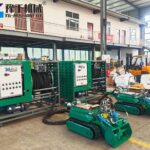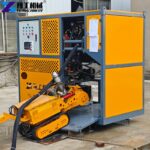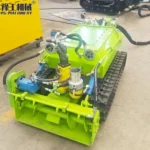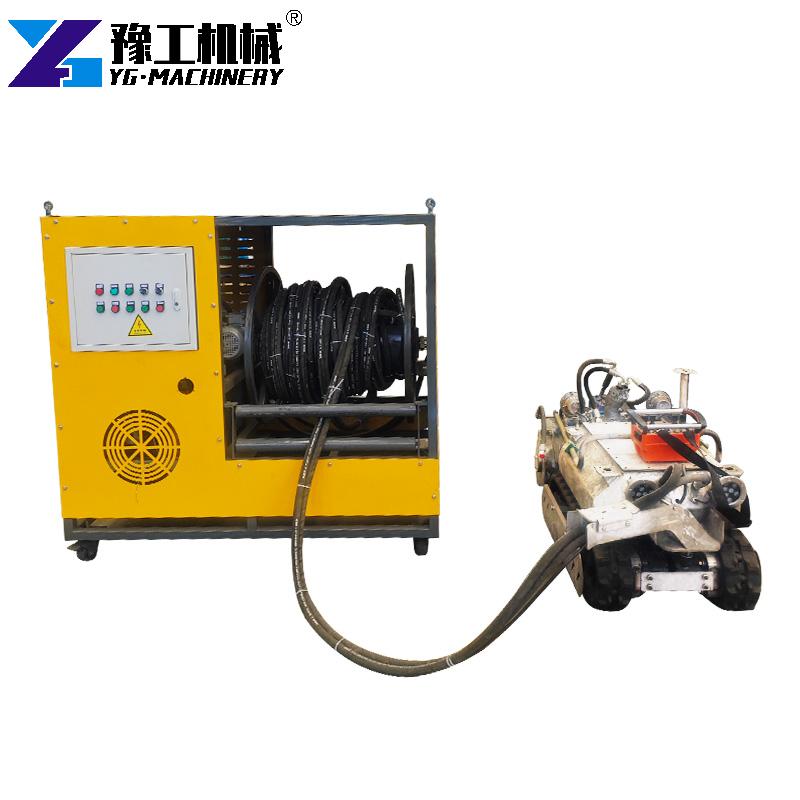
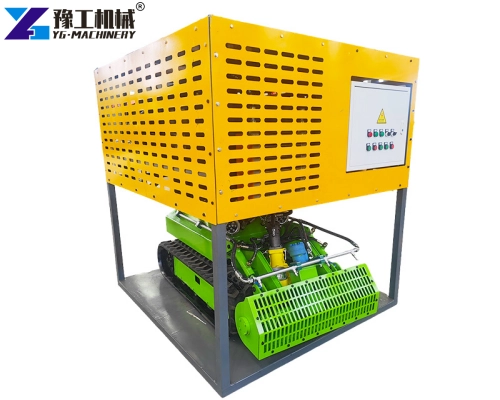
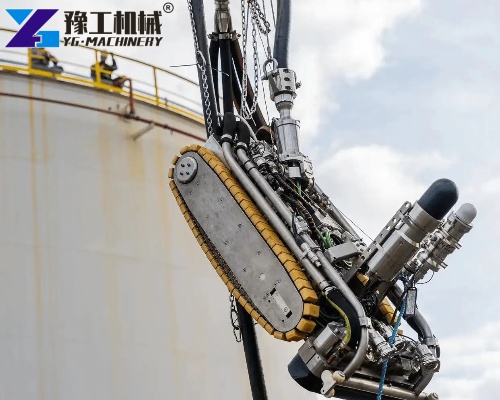
A sludge cleaning robot works best with pumpable sludge and settled sediment. The key factors are sludge thickness, particle size, chemical properties, working depth, and access width. For YG Machinery projects, we usually check the material first, then select the robot configuration.
Typical systems can handle about 100–300 m³/h, depending on sludge conditions and the pumping setup. Working depths can reach 10–30 m in suitable applications.
Tip: Send the sludge type, tank opening, and a few site photos before choosing a model.
Sludge Cleaning Robot Parameter
| Model | YG-500 | YG-600 | YG-700 | YG-800 | YG-900 | YG-1200 |
| Robot Size | 1500*500*650mm | 1500*600*650mm | 1600*700*650mm | 1600*850*700mm | 1650*960*750 | 1900*1200*750 |
| Dredging Width | 500mm | 600mm | 700mm | 800mm | 900mm | 1200mm |
| Track Travel Speed | 3-15m/s | 3-15m/s | 3-15m/s | 3-15m/s | 3-15m/s | 3-15m/s |
| Water Pump Flow Rate | 100 cubic meters | 100 cubic meters | 160 cubic meters | 160 cubic meters | 200 cubic meters | 200 cubic meters |
| Water Pump Head | 0-30m | 0-30m | 0-25m | 0-25m | 0-25m | 0-25m |
| Hydraulic Station Dimensions | 2200*1200*1700 | 2200*1200*1700 | 2200*1200*1700 | 2200*1200*1700 | 2200*1200*1700 | 2120*1240*1200 |
| Main Motor Power | 18kw | 18kw | 22kw | 22kw | 22kw | 45kw |
Oil Sludge: Is It Suitable?
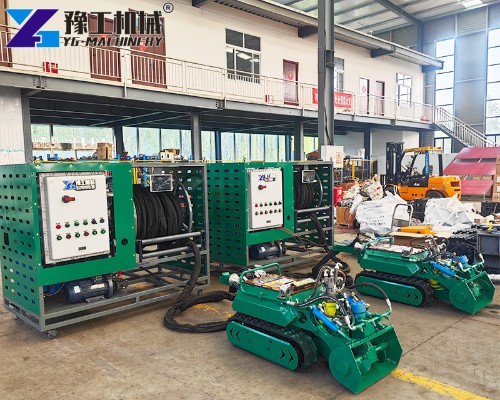
Recommended: Suitable with the right configuration
Oil sludge is one of the most common materials for robotic cleaning. However, its condition varies greatly between tanks. Soft oil sludge can usually be loosened and pumped directly. Thick deposits may need a hydraulic cutter before suction starts.
Required Configuration
- Strong sludge suction system
- Hydraulic cutter for compact deposits
- Remote control system
- Camera monitoring
- Oil-resistant hoses and seals
- Explosion-proof motor when required
Important Limitation
Highly viscous oil sludge can reduce suction efficiency. Thick bottom deposits may also need mechanical loosening.
An oil tank cleaning robot uses the same basic cleaning principle for this type of work.
Tip: Do not size the pump from tank volume alone. Sludge thickness matters more.
Wastewater Sludge: Is It a Good Match?

Recommended: Suitable
Wastewater sludge is generally well suited to robotic removal. Common sites include settling tanks, sewage pits, and wastewater treatment facilities.
The main issue is solids concentration. Thin sludge pumps easily. Heavy deposits may need cutting or high-pressure water first.
Required Configuration
- High-capacity suction system
- Hydraulic crawler drive
- Remote control
- Sludge discharge hose
- Optional high-pressure water system
Important Limitation
Large debris can block the suction line. Plastic, metal pieces, and stones should be removed before operation when possible.
Tip: Ask the plant operator for the estimated solids content before sizing the system.
Chemical Sludge: Can the Robot Work Safely?
Recommended: Suitable with the right configuration
Chemical sludge requires careful material selection. Strong suction alone does not solve the problem.
Corrosive liquids can attack metal parts, seals, hoses, and electrical components. Some chemical sites also contain flammable gases.
Required Configuration
- Corrosion-resistant components
- Chemical-compatible seals and hoses
- Explosion-proof motor when required
- Remote operation
- Camera monitoring
- Suitable electrical protection
Important Limitation
Do not enter an unknown chemical environment with standard equipment. The chemical type and concentration should be confirmed first.
An industrial tank cleaning robot may use the same platform when the configuration matches the chemical environment.
Tip: Give the supplier the chemical name and concentration.
Sand and Heavy Sediment: Can It Remove Them?
Recommended: Suitable with the right configuration
Sand and heavy sediment are denser than normal sludge. They can settle into hard layers at the bottom of tanks, pits, and waterways.
Direct suction may work with loose material. Compact layers usually need mechanical loosening.
Required Configuration
- Hydraulic cutter
- High-pressure water jet
- Heavy-duty suction system
- Wear-resistant hoses
- Strong crawler drive
Important Limitation
Large stones are not the same as sand. Oversized rocks can block hoses or damage the suction system.
For deeper submerged sediment, the same machine may also be described as an underwater dredging robot.
Tip: Check the largest solid particle before selecting the suction system.
Hardened Sludge: Is It Still Suitable?
Recommended: Not recommended for direct suction
This is the most important limitation. Very thick or hardened sludge cannot simply be sucked away.
If the material behaves like clay, asphalt, or a solid cake, the suction system cannot move it effectively. Mechanical breaking or water dilution must come first.
Possible Pre-Treatment
- High-pressure water loosening
- Mechanical breaking
- Water dilution
- Manual removal of oversized deposits
After the material becomes pumpable, the robot can remove it through the suction system.
Important Limitation
A sludge cleaning robot is not a substitute for heavy breaking equipment. Concrete-like or fully hardened deposits may require another machine first.
Tip: If you cannot stir the sludge with a rod, do not expect direct suction to work.
When Is a Sludge Cleaning Robot Not Recommended?
Some materials fall outside the practical suction range. Buying a larger pump does not solve every material problem.
It is generally not recommended for direct suction when dealing with:
- Fully hardened sludge
- Concrete-like deposits
- Large rocks
- Oversized solid waste
- Unknown reactive chemicals
- Materials with almost no fluidity
- Uncontrolled hazardous atmospheres
Pre-treatment may make some materials pumpable. However, the additional process must be included in the project plan.
Does Tank Access Affect Robot Selection?
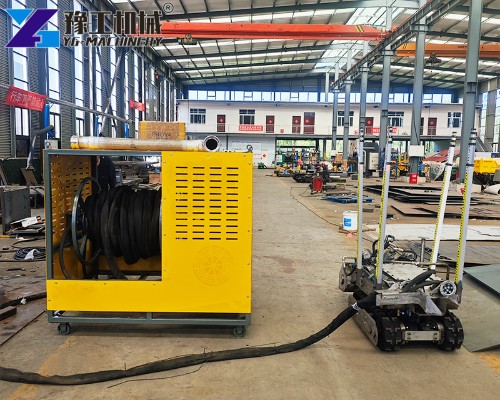
Recommended: Suitable when the opening matches the robot
Material compatibility is only one part of the selection process. The robot must also enter the working area.
Typical project requirements may include 600, 800, 900, 1200, or 1500 mm access widths. The smallest opening determines the suitable robot configuration.
Required Configuration
- Correct robot width
- Suitable hose length
- Remote camera system
- Proper lifting and lowering method
Important Limitation
A large tank does not mean a large robot will fit. The access opening comes first.
Sludge Cleaning Robot Quick Material Compatibility Guide
| Material / Condition | Recommendation | Main Configuration | Important Limitation |
|---|---|---|---|
| Pumpable oil sludge | Suitable with the right configuration | Suction, remote control, explosion-proof motor if required | High viscosity reduces suction |
| Water-rich wastewater sludge | Suitable | Suction, crawler drive, remote control | Dense sludge may need dilution |
| Chemical sludge | Suitable with the right configuration | Corrosion-resistant parts, compatible seals | Chemical compatibility |
| Loose sand and sediment | Suitable with the right configuration | Suction, water jet, wear-resistant hoses | Compact layers may need loosening |
| Very thick hardened sludge | Not recommended for direct suction | Pre-treatment required | Cannot flow into suction system |
| Concrete-like deposits | Not recommended | Separate breaking equipment | Beyond normal suction work |
| Large rocks | Not recommended | Pre-removal required | Pump and hose damage |
| Unknown reactive chemicals | Not recommended | Chemical assessment required | Safety risk |
| Uncontrolled hazardous atmosphere | Not recommended | Site safety assessment | Serious safety risk |
How Do You Know If Your Site Is Suitable?
Start with five simple questions:
- What material needs to be removed?
- Is the material still fluid?
- How much water does the sludge contain?
- What is the largest solid particle?
- What are the tank opening and working depth?
Then check the required pumping capacity. Common targets include 100, 150, and 200 m³/h.
The right sludge cleaning robot depends on the complete working condition. Material fluidity comes first. Then check particle size, access, depth, pumping distance, and safety requirements.
Tip: If the sludge is very thick, send us a photo or video first. We can judge whether direct suction is realistic before discussing the machine model.