
The answer is simple: the right mobile concrete mixer truck is not about the lowest price. It is about matching capacity, road conditions, and working needs. Many overseas buyers focus only on machine price at first. However, after the equipment arrives, some find problems like slow feeding, poor mobility, or difficulty working during the rainy season.
Over the past years, I have talked with contractors from Africa, Southeast Asia, and South America. Most had similar challenges. Their construction sites were far from concrete plants, and traditional mixers could not meet daily demand.
After switching to a self-loading concrete mixer truck, they could load materials, mix concrete, and pour directly at the job site. Waiting time was reduced, and project control became easier.
For small and medium projects, I usually recommend a 3.5m³ mobile concrete mixer truck. It offers a good balance between output, fuel use, and mobility.
Tip from experience: If your project needs around 40–80m³ concrete per day, a 3.5m³ model is often the practical choice.
Why Are More Contractors Choosing a Mobile Concrete Mixer Truck?
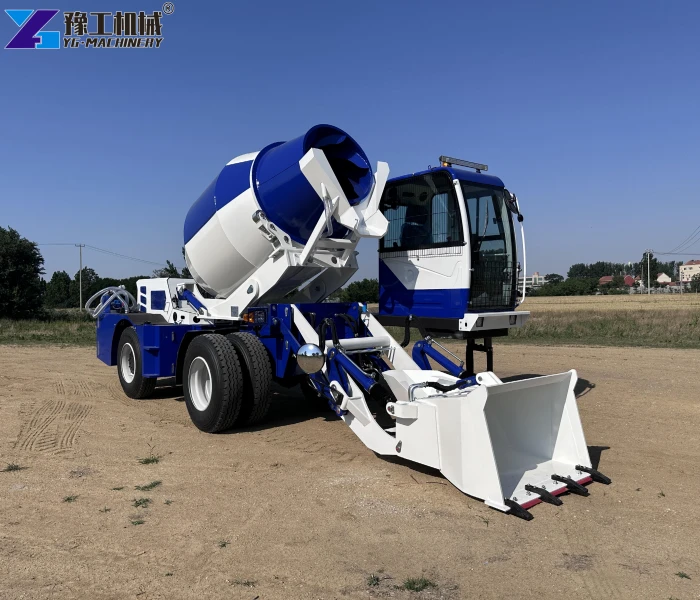
The main reason is lower operating cost. When a construction site is more than 20 km away from a concrete plant, transportation costs increase quickly. A mobile concrete mixer allows operators to load materials, measure, mix, and discharge concrete directly on site.
This type of machine works well for:
- Rural road construction;
- Mountain and island projects;
- Farm and industrial building foundations;
- Mining camps and temporary construction sites;
- Water projects and small bridge construction.
Many customers first buy this equipment to reduce labor costs. Later, they find the bigger advantage is less concrete waste. Producing concrete according to actual demand helps avoid leftover material.
Tip from experience: The farther your site is from a concrete supply station, the more value a self loading mixer can bring.
How to Choose the Right Mobile Concrete Mixer Truck Capacity?
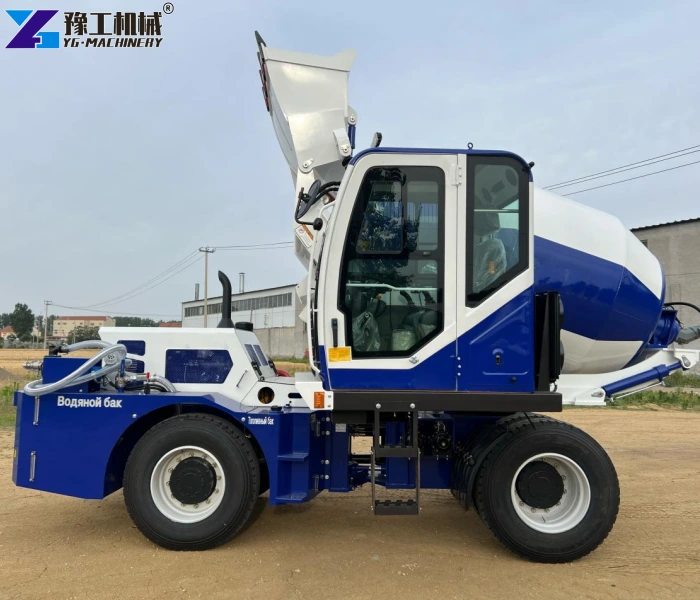
1.8m³ Model for Small Construction Sites
The 1.8m³ model fits farms, small houses, and repair projects. It is easy to move but has limited daily output.
2.6m³ Model for Township Projects
The 2.6m³ model is suitable for village roads, drainage projects, and small factory foundations. It provides higher efficiency than smaller models.
3.5m³ Model (Most Popular Choice)
The 3.5m³ model is the most requested size from overseas buyers. It provides enough production while keeping good mobility in narrow working areas.
4m³ Model for Higher Output Projects
The 4m³ model works well for roads, industrial parks, and continuous concrete pouring. However, it needs more space for operation and transportation.
Why Are Engine, Torque Converter, and Chassis Important for a Mobile Concrete Mixer Truck?
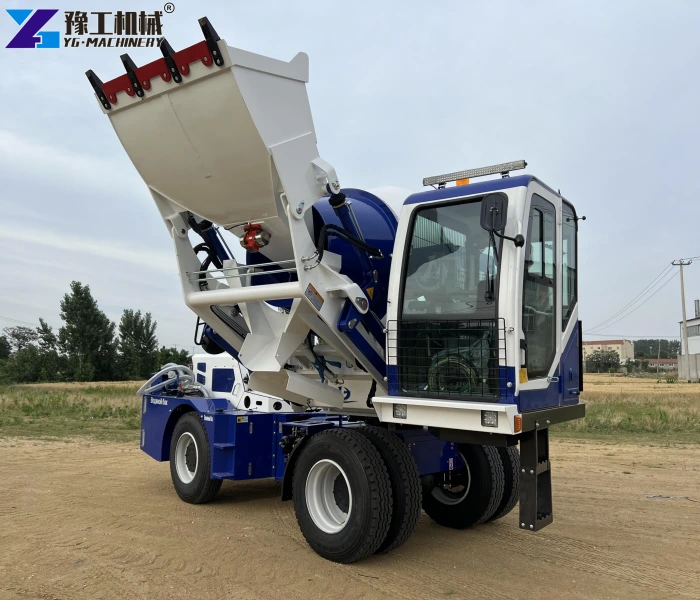
The key point is this: under heavy loads and difficult roads, the transmission system can matter more than engine horsepower.
YG Machinery mobile concrete mixer trucks come with Yuchai engines as standard. Cummins and Weichai options are also available according to customer requirements.
Different markets have different preferences. Yuchai engines are widely used in many developing countries because spare parts are easy to find. Cummins engines are often selected for long-term heavy-duty operation.
Another important part is the reinforced torque converter. It is designed with stronger structure and higher load capacity.
During uphill driving or full-load operation, it provides stronger torque output. At lighter loads, it helps maintain better fuel efficiency.
I once worked with a customer whose old mixer had overheating problems during the rainy season. After changing to a stronger transmission system, machine stability improved significantly.
Does the Mixing Tank and Bucket Design Affect Real Production?
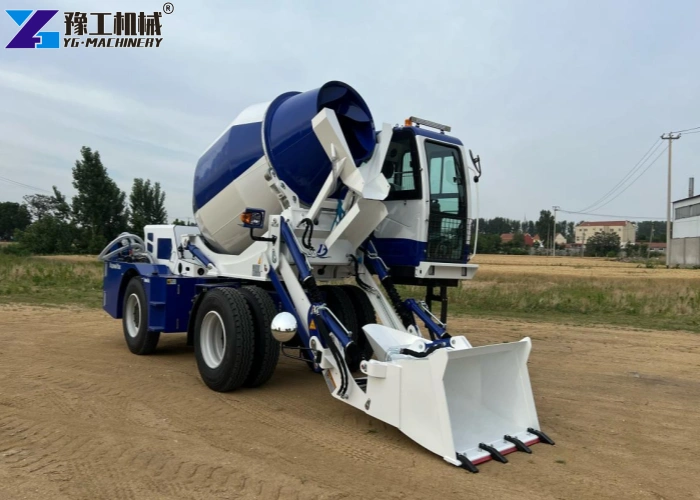
Yes. The mixing system directly affects daily output. Some low-cost machines do not fail because of the engine. They fail because feeding is slow and discharge is not smooth.
YG Machinery uses a manganese steel mixing tank with a 6-blade, 3-spiral, and 8-paddle structure.
This design improves loading speed and helps maintain continuous discharge. It is especially useful for projects requiring stable concrete supply.
The third-generation bucket uses wear-resistant materials and reinforced bottom plates. The curved feeding design reduces material sticking and works together with vibration assistance for smoother loading.
The tank is also coated inside and outside with epoxy primer. This improves corrosion resistance, especially in coastal and humid countries.
What Industries Can Use a Mobile Concrete Mixer Truck?
Rural Road Construction
The machine can produce concrete directly near the construction area and reduce transportation distance.
Small Bridge Projects
Stable concrete supply helps with sectional pouring work.
Mining Camps
Remote locations often have no nearby concrete plants, making self loading mixers very practical.
Farm Construction
Operators can move between different working points easily.
Industrial Parks
The equipment works well for temporary foundations and equipment platforms.
From my experience, mountain road projects show the biggest advantage. Traditional concrete trucks often cannot reach difficult locations, while self loading models can continue working.
Tip from experience: If your site is remote, scattered, and has unstable concrete demand, this equipment usually makes more sense than a fixed mixing station.
Overseas Customer Case: How a Contractor in Uganda Increased Daily Output to 60m³
Uganda Mountain Water Project
Machine: 3.5m³ mobile concrete mixer truck
Customer Problem
David was responsible for a mountain water construction project. Before buying a new machine, he used a traditional small mixer.
The daily output was only around 25m³. Workers also spent too much time loading materials manually.
Solution
He purchased a 3.5m³ mobile concrete mixer truck with:
- Two-way driving system;
- Synchronized steering;
- Low-pressure off-road tires.
Results After Three Months
- Daily production increased to about 55–60m³;
- Three workers were reduced from the operation team;
- Fuel cost became lower than using two separate machines;
- The machine continued working during rainy seasons.
Frequently Asked Questions About Mobile Concrete Mixer Truck
Normally, it can produce around 50–80m³ per day. The final output depends on loading distance and job organization.
Yuchai works well for general projects. Cummins is suitable for heavy-duty operation. Weichai can be a good choice where local parts availability is better.
It helps operators work in narrow areas without frequent turning. This is useful for villages, mountains, and limited spaces.
Yes. The epoxy coating and manganese steel tank improve durability. Regular cleaning is still recommended.
If your project size is not fixed, the 3.5m³ model is usually more flexible. It fits more working conditions.
Final Buying Advice: Check Your Job Site Before Choosing Equipment
Many buyers ask about price first. However, I usually suggest checking three points:
- How much concrete do you need every day?
- Are your roads hard surface or muddy?
- Does the machine need frequent movement?
These answers are more important than simple specifications.
For projects requiring 40–80m³ concrete per day, difficult roads, and on-site mixing, a 3.5m³ mobile concrete mixer truck is often the most balanced solution.
YG Machinery provides different configurations based on project needs, including engine options and tire solutions. For overseas buyers, flexible configuration is often more useful than a fixed standard machine.