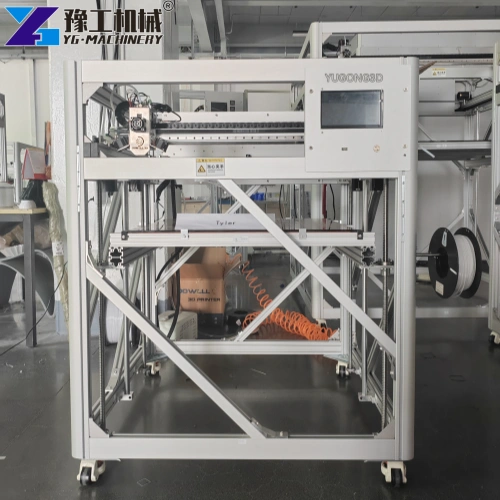
Industrial FDM 3D printer technology is now a key tool in manufacturing. According to the Wohlers Report, the industrial 3D printing market still grows at a double-digit rate. Many factories now use FDM systems for prototypes, functional parts, and production fixtures.
Traditional machining often takes 7 to 15 days. An industrial FDM system can finish the same task within hours. The difference is huge.
When we speak with European and North American buyers, most focus on three things: print stability, material compatibility, and long-term maintenance cost. However, many competitor websites only talk about print speed. They miss the factors that really affect factory productivity.
💡 Tip: Do not focus only on speed. Stable printing matters more.
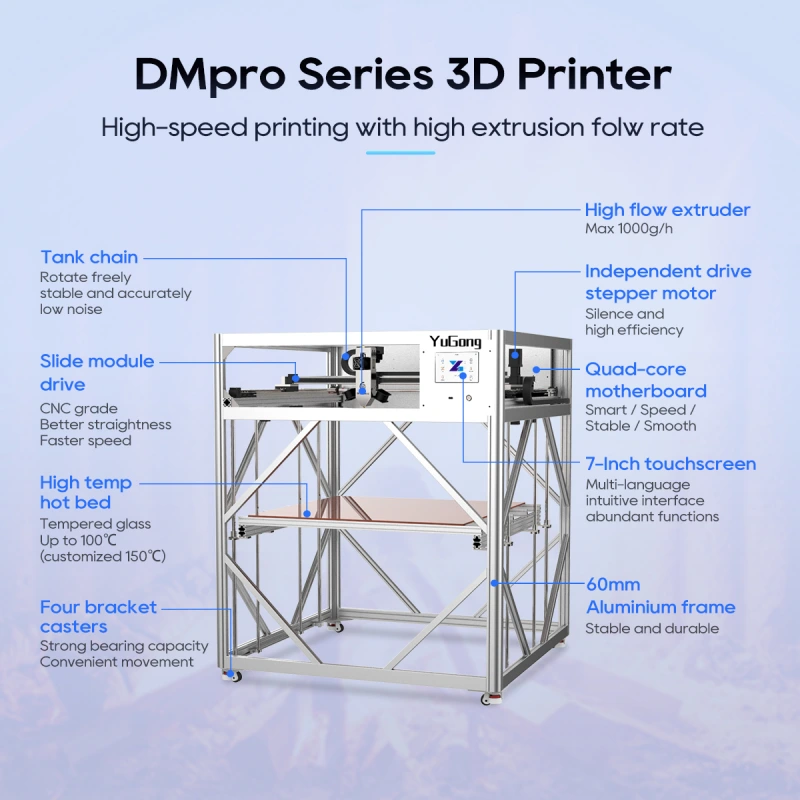
Industrial FDM 3D Printer Parameter
| Model | YG-DMpro | YG-DL |
| Printing speed | 150-500mm/s | 150-500mm/s |
| Nozzle diameter | 0.8mm/1.2mm/1.6mm/Customizable | 0.8mm/1.2mm/1.6mm/Customizable |
| Control panel | 10-inch color capacitive touchscreen | 10-inch color capacitive touchscreen |
| Nozzle temperature | 0-350℃ | 0-350℃ |
| heated bed temperature | 0-100℃ | 0-100℃ |
| Constant temperature heating | 0-60℃ | 0-60℃ |
| File types | STL/STP/STEP/OBJ/GCODE/JPG, etc. | STL/STP/STEP/OBJ/GCODE/JPG, etc. |
| Consumable specifications | 2.85mm universal consumables | 2.85mm universal consumables |
| Consumable types | PLA/ABS/ASA/PETG/PVA/TPU, etc. | PLA/ABS/ASA/PETG/PVA/TPU, etc. |
| Positioning accuracy | 0.002mm | 0.002mm |
| Connection method | WIFI connection / offline printing via USB flash drive | WIFI connection / offline printing via USB flash drive |
| Input power | 110v/220v | 110v/220v |
| Optional features | 60°C constant temperature enclosure / 150°C high temperature platform | constant temperature enclosure / 150°C high temperature platform |
What Makes An Industrial FDM 3D Printer Better For Manufacturing?
1. High Precision Printing Reduces Rework
A high precision 3d printer can keep layer accuracy within 0.1mm. This matters for industrial components.
Many automotive customers need assembly testing. If dimensions shift too much, the test fails. Because of this, stable mechanics are more important than extreme speed.
YG Machinery uses dual linear rails and a stable temperature control system. Vibration stays low during printing. Surface quality improves.
2. Multi-Material Support Fits Industrial Production
Industrial users rarely print only PLA.
They also use ABS, PETG, nylon, and carbon fiber materials. In 3d printing for automotive, heat resistance matters a lot.
Our engineering team once helped a German customer produce automotive fixtures. Before that, they used CNC machining. One fixture cost more than $280. After switching to an industrial FDM 3D printer, costs dropped by about 63%. The result was obvious.
3. Dual Extruder Design Saves Time
Many suppliers ignore the value of dual extruders.
A dual extruder 3d printer can print soluble supports and multi-material parts. Complex structures become easier to produce. Post-processing time becomes shorter.
This is very important for healthcare models and industrial prototypes.
Where Is Industrial FDM 3D Printer Technology Used?
Automotive Industry
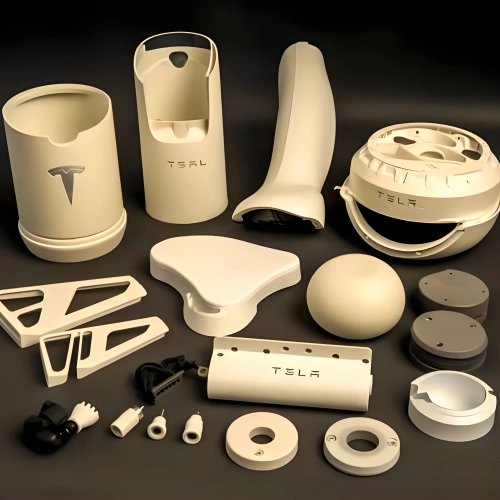
3d printing for automotive is one of the fastest-growing applications.
Factories often print:
- Functional prototypes
- Assembly fixtures
- Air duct test parts
- Small-batch custom components
A customer from Poland, Tomas, used our machines for automotive interior testing parts. Before that, every design update required a new mold. Now, testing finishes within one day. Development time became 45% shorter.
Healthcare Industry
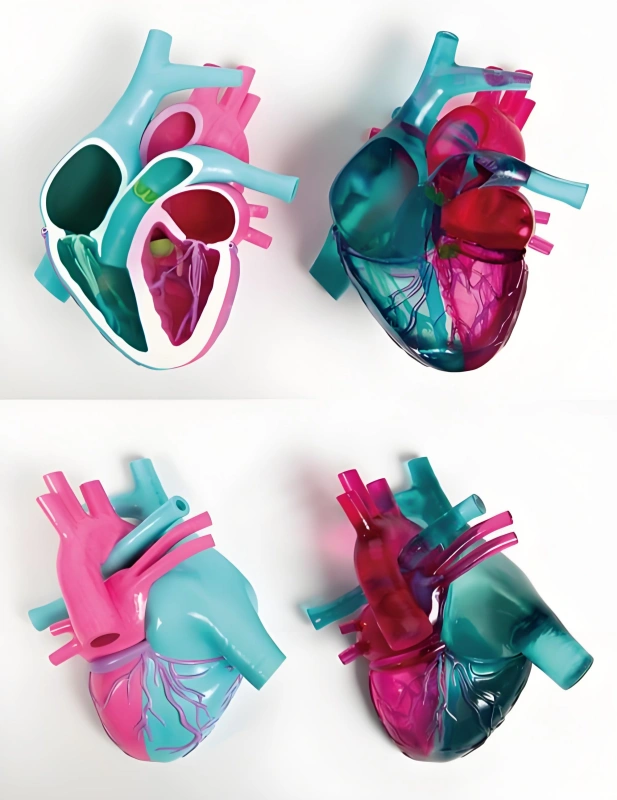
healthcare 3d printing requires strong accuracy.
Hospitals often print:
- Surgical planning models
- Custom rehabilitation tools
- Medical teaching models
A medical equipment buyer from Spain told us their old process depended on outsourcing. Modifications were slow. After using a high precision 3d printer, model production time dropped by over 70%. Doctor communication has improved a lot.
Education And Product Design
The education market also grows quickly. Many schools now build 3D printing labs because FDM systems are simple to maintain. Material cost is low.
Design studios care more about rapid prototyping. They want fast validation instead of waiting for factory samples.
Why Do Many Industrial FDM 3D Printer Jobs Fail?
This is a real buyer concern. Based on industry experience, more than 60% of print failures come from unstable mechanics, not software.
Common problems include:
- Heated bed instability
- Rail misalignment
- Nozzle blockage
- Layer shifting during long prints
At YG Machinery, we run 72-hour continuous print testing before shipment. Many suppliers never mention this.
Long-term stability is a true industrial standard.
💡 Tip: Continuous printing ability matters more than short-term speed.
Customer Case: How A Canadian Buyer Reduced Prototype Costs
In 2024, we worked with a Canadian industrial designer named Mark. He develops agricultural machinery components. Before using our system, every prototype required CNC machining. One sample cost about $450. Lead time was nearly two weeks.
Later, he purchased our industrial FDM 3D printer.
The results were clear:
- Prototype development time dropped by 60%
- Sample cost decreased by around 75%
- Product modification became faster
- Small-batch testing improved
Mark later added two more machines. His engineering team started depending on fast iteration.
Industrial FDM 3D printer systems are no longer simple prototype tools.
They now help factories reduce cost, shorten development cycles, and improve product testing speed.
For automotive, healthcare, and industrial manufacturing, high stability, strong accuracy, and open material compatibility have become key buying factors.
YG Machinery continues to provide reliable industrial 3D printing solutions for global customers and supports faster product development.