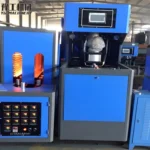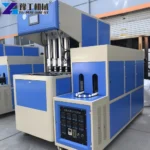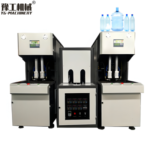
A bottle blow molding machine is a key production system for making plastic containers with stable quality and efficiency. It heats plastic preforms and uses high-pressure air to stretch and form bottles. Today, these machines can process PET, PP, PC, and PLA materials for different industries.
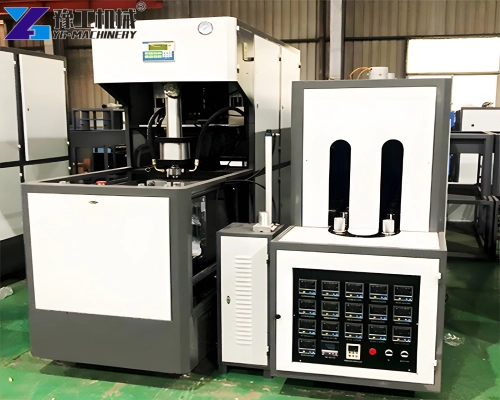
Many factories need more than a simple bottle forming solution. They need stable output, suitable cavity numbers, and correct settings for their bottle design. A well-matched machine helps reduce material waste and improves daily production.
Bottle Blow Molding Machine Parameters
| Water Bottle Blowing Machine | YG-2L-2 | YG-2L-4 | YG-2L-6 | YG-2L-8 |
| Cavity | 2 | 4 | 6 | 8 |
| Theory output | 2000-2700 | 4000-5000 | 6000-7200 | 8500-9000 |
| Max. volume | 2L | 2L | 2L | 2L |
| Bottle mouth maximum overall diameter | 80mm | 28-38mm | 28-38mm | 28-38mm |
| Bottle biggest diameter | 100mm | 100mm | 100mm | 100mm |
| Bottle maximum height | 330mm | 330mm | 330mm | 330mm |
| Light tube quantity | 16pcs | 40pcs | 64pcs | 32pcs |
| Light tube power | 1.5KW | 1.5KW | 1.5KW | 1.5KW |
| Maximum heating power | 24KW | 40KW | 80KW | 80KW |
| All-electric machine installation | 26KW | 60KW | 85KW | 85KW |
| Actual consumption | 19KW | 30KW | 40KW | 40KW |
| Work pressure | 7-9kg/c㎡ | 7-9kg/c㎡ | 7-9kg/c㎡ | 7-9kg/c㎡ |
| Low-pressure gas consumption | 1000L/min | 1600L/min | 1600L/min | 1600L/min |
| Blow bottle pressure | 25-35kg/c㎡ | 25-35kg/c㎡ | 25-35kg/c㎡ | 25-35kg/c㎡ |
| Higher-pressure gas consumption | 1500Ltr/min | 3000Ltr/min | 4000Ltr/min | 4800Ltr/min |
| Work pressure | 5-6 kg/c㎡ | 5-6 kg/c㎡ | 5-6 kg/c㎡ | 5-6 kg/c㎡ |
| Temperature range | 10℃ | 10℃ | 10℃ | 10℃ |
| Consumption | 5000kcal/hr | 8000kcal/hr | 8000kcal/hr | 12000kcal/hr |
| Frozen water flow | 30L/min | 88L/min | 88L/min | 88L/min |
| Size of the machine | 2.5*1.6*1.7 m | 4.5*2.0*2.3 m | 6.5*2.0*1.9 m | 6.7×2.0×2.3m |
| Weight of the machine | 2.0ton | 4.0ton | 5.5ton | 6.0ton |
How Does a Bottle Blow Molding Machine Work Step by Step?
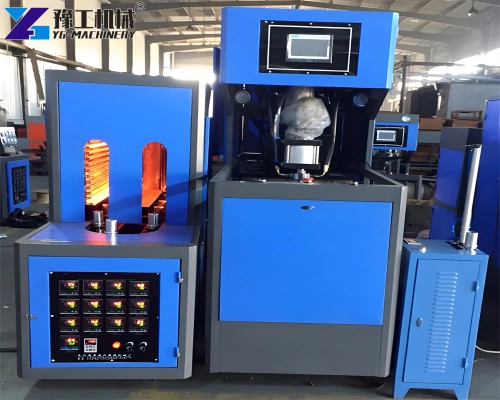
A bottle blow molding machine completes bottle production through four main steps: heating, stretching, blowing, and cooling.
First, the preforms enter the heating system. The infrared heating unit warms the preforms evenly. Proper temperature control helps the plastic reach the right forming condition.
Next, the heated preform moves into the mold. The stretch rod extends the material vertically. At the same time, high-pressure air expands the preform until it fits the mold shape.
Finally, the cooling system fixes the bottle structure. This process creates bottles with stable dimensions and better appearance.
💡 Technical Tip: Uneven heating often causes different bottle wall thicknesses.
What Materials Can a Bottle Blow Molding Machine Produce?
A modern bottle blow molding machine can process PET, PP, PC, and PLA materials with suitable configurations.
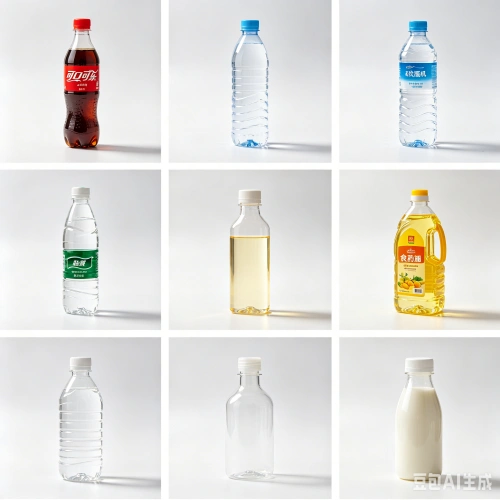
PET Material
PET is the most common bottle material worldwide.
It is widely used for:
- Mineral water bottles
- Beverage bottles
- Juice containers
- Cooking oil bottles
PET provides:
- High transparency
- Lightweight design
- Good recycling value
PP Material
PP offers better heat resistance compared with PET.
Common applications include:
- Food containers
- Household packaging
- Daily chemical bottles
PC Material
PC provides high strength and clear appearance.
It is often used for:
- Strong transparent containers
- Special-purpose bottles
PLA Material
PLA is used for environmentally friendly packaging.
It is suitable for:
- Biodegradable containers
- Green packaging products
In some markets, customers also use the term PET moulding machine when they search for PET bottle manufacturing equipment.
💡 Technical Tip: Different plastics need different heating temperatures and blowing pressure settings.
How Does a Bottle Blow Molding Machine Choose Production Capacity?
The correct bottle blow molding machine depends on bottle size, preform weight, and production target. Cavity number affects speed, but it does not decide the final output alone.
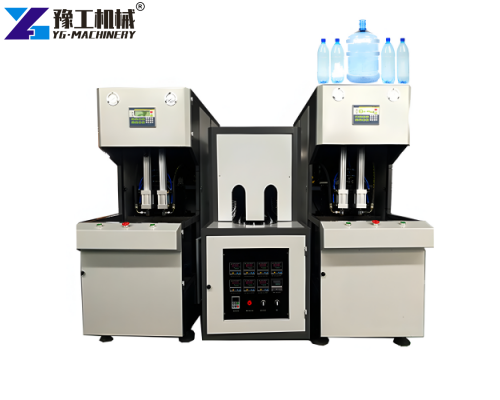
For 500ml bottles, typical production data is:
| Machine Type | Output Range |
|---|---|
| Full automatic 2 cavity | 1600–2200 bottles/hour |
| Full automatic 4 cavity | 3500–5000 bottles/hour |
| Full automatic 6 cavity | 5500–7000 bottles/hour |
| Basic 2 cavity | 1300–1600 bottles/hour |
| Basic 4 cavity | 2600–3000 bottles/hour |
YG Machinery mainly recommends 2-cavity and 4-cavity models for most overseas buyers.
2 Cavity Model
It is suitable for:
- Small and medium factories
- New production lines
- Stable daily output
4 Cavity Model
It is suitable for:
- Medium-scale production
- Higher bottle demand
- Continuous manufacturing
6 Cavity Model
It is suitable for:
- Large production requirements
If customers need different output levels, other machine configurations can be selected based on actual production conditions.
💡 Technical Tip: Always check bottle weight before comparing machine output.
Why Does Preform Weight Affect Bottle Blow Molding Machine Performance?
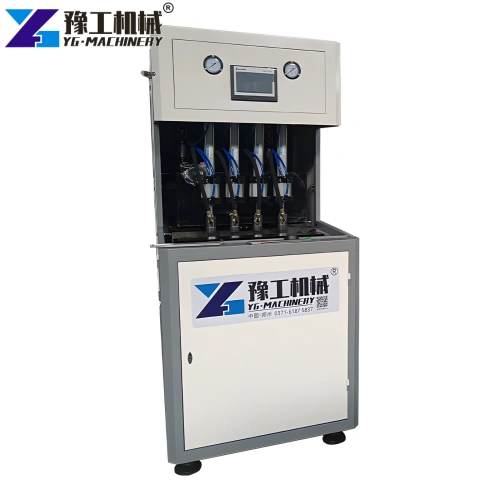
Preform weight directly affects the forming cycle and bottle quality.
A lightweight preform usually requires:
- Less heating time
- Faster cooling
- Higher production speed
A heavier preform usually provides:
- Stronger bottle structure
- Thicker walls
- Better impact resistance
For example, a 500ml water bottle normally uses a lighter preform than a large 5L container. Therefore, two machines with the same cavity number may have different actual output.
What Industries Use a Bottle Blow Molding Machine?
A bottle blow molding machine is used in many industries because plastic containers are needed in daily production.
Beverage Industry
A water bottle blowing machine is commonly used for:
- Mineral water bottles
- Carbonated drink bottles
- Juice bottles
Main requirements:
- Clear bottle appearance
- Stable production speed
Food Industry
Applications:
- Cooking oil bottles
- Sauce containers
- Food packaging bottles
Main requirements:
- Strong bottle walls
- Reliable sealing performance
Cosmetic Industry
Applications:
- Shampoo bottles
- Lotion containers
- Personal care packaging
Main requirements:
- Smooth surface
- Good appearance
Pharmaceutical Industry
Applications:
- Medicine bottles
- Healthcare packaging
Main requirements:
- Accurate bottle size
- Stable production quality
A blowing machine for plastic bottle production must match the final bottle design, material, and industry requirements.
What Auxiliary Equipment Does a Bottle Blow Molding Machine Need?
A stable bottle blow molding machine system needs more than the main unit. Air quality, cooling performance, and motion control also affect bottle quality.
The main supporting equipment includes:
Air Compressor
The air compressor provides high-pressure air for bottle forming.
During blowing, the compressed air expands the heated preform inside the mold. If the air pressure is unstable, the bottle size and shape may change.
A stable air supply helps improve:
- Bottle thickness consistency
- Production stability
- Finished product quality
Air Dryer
The air dryer removes moisture from compressed air.
Moisture inside the air system can cause:
- Water marks on bottles
- Lower transparency
- Surface defects
Dry compressed air helps produce clearer bottles.
Water Chiller
The water chiller controls mold temperature during production.
A proper cooling system helps:
- Shorten cooling time
- Improve bottle shape stability
- Reduce deformation
Servo System
Higher-level machines may use servo motors instead of some pneumatic movements.
Benefits include:
- More accurate movement
- Lower energy consumption
- Better repeatability
💡 Technical Tip: Many bottle quality problems come from unstable air and cooling systems, not only from the main machine.
How Does a Bottle Blow Molding Machine Solve Common Bottle Defects?
Most bottle problems come from incorrect process settings. Proper adjustment can improve production results.
Why Is the Bottle Bottom Too Thick?
Possible reasons:
- Uneven preform heating
- Incorrect stretching ratio
- Poor temperature control
Solutions:
- Adjust heating zones
- Optimize stretch rod position
- Check preform temperature
Why Is the Bottle Body Uneven?
Possible reasons:
- Uneven heating
- Unstable blowing pressure
- Wrong mold parameters
Solutions:
- Check infrared heating balance
- Adjust air pressure
- Improve mold settings
Why Is the Bottle Cloudy?
Possible reasons:
- Moisture in compressed air
- Poor cooling performance
- Incorrect heating temperature
Solutions:
- Install a better air drying system
- Check cooling water temperature
- Adjust heating parameters
Malaysia Customer Case: Improving 500ml Bottle Production Stability
A Malaysia customer named Daniel was producing 500ml beverage bottles for local distribution.
Before purchasing a new bottle blow molding machine, the customer had several production issues:
- Unstable bottle output
- Frequent manual adjustments
- Different bottle weights during production
After discussing the bottle size, material, and daily production target, we recommended a full automatic 4 cavity machine.
The customer needed around 30,000 bottles per day.
The selected machine matched his production requirement because the 4-cavity configuration can normally produce around 3500–5000 bottles/hour for 500ml bottles, depending on preform weight and machine settings.
During production preparation, we focused on:
- Selecting suitable PET preforms
- Adjusting heating zones
- Improving cooling parameters
- Matching blowing pressure
After operation:
- Production became more stable
- Bottle quality became more consistent
- Manual adjustment frequency decreased
Daniel shared: “Now the production line runs much smoother.”
For this customer, the biggest improvement was not only higher speed. It was easier daily operation and fewer production interruptions.
Bottle Blow Molding Machine FAQ
Yes. However, different bottle sizes require different settings.
The machine may need adjustments for:
Mold design
Heating temperature
Stretching ratio
Blowing pressure
For example, a 500ml water bottle and a 5L container need different forming conditions. Small bottles usually need faster heating and shorter cooling cycles. Large bottles require stronger stretching control.
Yes, but the machine configuration needs proper planning.
If the production requirement is about 3000 bottles per day for both 500ml and 5L bottles, a semi automatic single-cavity 5L machine can be used.
However, two additional small cylinders are needed for 500ml bottle production.
The reason is:
A 5L bottle requires a larger cylinder because it needs more stretching force.
This larger cylinder cannot provide the best forming performance for a small 500ml bottle.
With the correct cylinder configuration, one machine can handle both bottle sizes more efficiently.
Both terms relate to plastic bottle production.
A PET moulding machine is often used when customers search for PET bottle manufacturing equipment.
A bottle blow molding machine focuses on the blowing process. It heats preforms and expands them into finished bottles.
When selecting equipment, buyers should focus on:
Material type
Bottle size
Production capacity
Mold cavity number
The production requirement is more important than the machine name.
A properly configured machine can produce bottles from:
PET
PP
PC
PLA
Each material needs different settings.
PET is widely used for water and beverage bottles.
PP is suitable for heat-resistant containers.
PC is used for stronger transparent products.
PLA is used for eco-friendly packaging.
A bottle blow molding machine is a complete production solution that combines heating control, stretching technology, high-pressure air blowing, and cooling management.
The correct machine choice depends on:
- Bottle material
- Bottle size
- Required output
- Cavity number
- Supporting equipment
YG Machinery helps overseas customers select suitable configurations based on real production needs.
Whether producing PET water bottles, PP containers, PC products, or PLA packaging, the right setup helps factories achieve stable and efficient production.