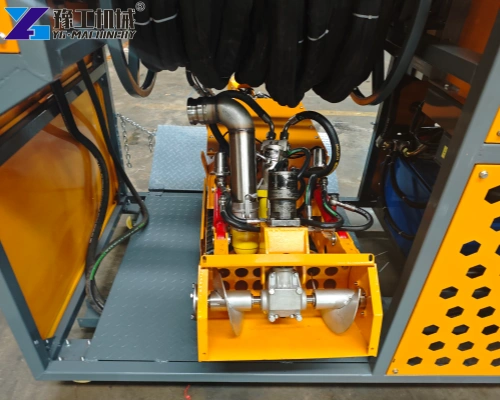
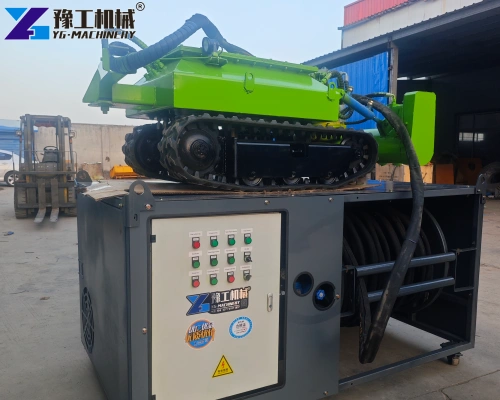
Tank cleaning is moving into remote robotic systems. In overseas projects, confined space accident rates reach 3%-5%. The main risks are toxic gas and oxygen deficiency. An oil tank cleaning robot keeps workers outside the tank. All operations are controlled remotely. Safety improves immediately. Downtime is reduced.
Oil Tank Cleaning Robot Parameter
| Model | YG-500 | YG-600 | YG-700 | YG-800 | YG-900 | YG-1200 |
| Robot Size | 1500*500*650mm | 1500*600*650mm | 1600*700*650mm | 1600*850*700mm | 1650*960*750 | 1900*1200*750 |
| Dredging Width | 500mm | 600mm | 700mm | 800mm | 900mm | 1200mm |
| Track Travel Speed | 3-15m/s | 3-15m/s | 3-15m/s | 3-15m/s | 3-15m/s | 3-15m/s |
| Water Pump Flow Rate | 100 cubic meters | 100 cubic meters | 160 cubic meters | 160 cubic meters | 200 cubic meters | 200 cubic meters |
| Water Pump Head | 0-30m | 0-30m | 0-25m | 0-25m | 0-25m | 0-25m |
| Hydraulic Station Dimensions | 2200*1200*1700 | 2200*1200*1700 | 2200*1200*1700 | 2200*1200*1700 | 2200*1200*1700 | 2120*1240*1200 |
| Main Motor Power | 18kw | 18kw | 22kw | 22kw | 22kw | 45kw |
How Does an Oil Tank Cleaning Robot Work?
It works through breaking, suction, and transfer.
Typical system includes:
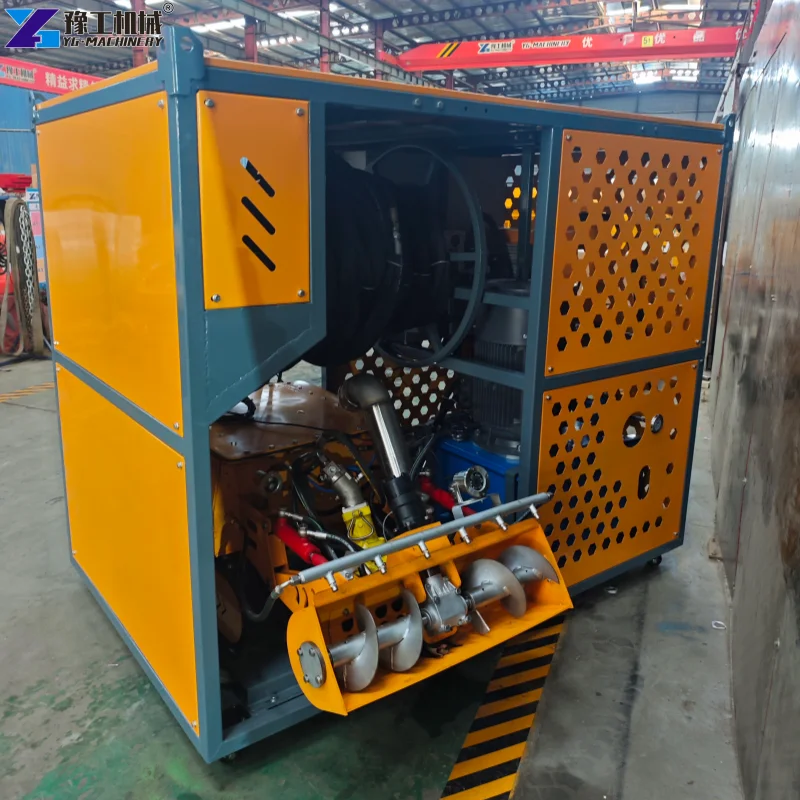
- hydraulic power unit
- sludge suction system
- remote control system
- high pressure pump
Robot enters tank and breaks sludge first. Then suction system removes it. No human entry required. In Europe tests, efficiency improved 50%-60%.
Tip: Thick sludge needs strong suction, not big size.
Is Oil Tank Cleaning Robot the Same as Dredging Robot?
Yes, it is the same system.
Different names are used in different jobs:
- Oil tank cleaning robot → tank cleaning
- Dredging robot → industrial and municipal cleaning
- Underwater dredging robot → deep sludge environment
But core system is identical:
- hydraulic drive system
- sludge suction system
- remote control system
- confined space platform
Difference is working environment only.
👉 Same machine, different application.
Where Is Oil Tank Cleaning Robot Used?
1. Oil storage industry
Fuel and crude tank cleaning.
2. Chemical plants
Handles corrosive sludge.
3. Wastewater plants
Sediment tank cleaning.
4. Confined industrial spaces
Underground tanks and pits. Main risk is human entry.
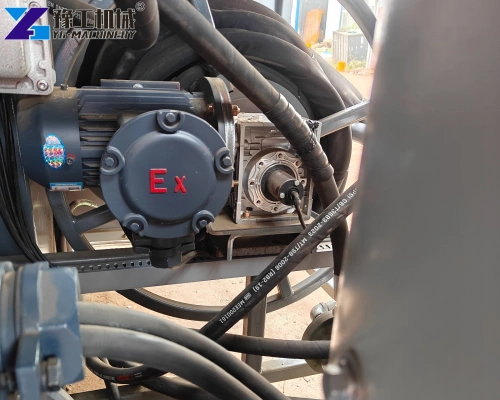
Tip: Explosion-proof is required in chemical sites.
Netherlands Case Study
Conclusion: cleaning time reduced from 3 days to 1 day.
Client: contractor Mark
Project: fuel tank cleaning
Problem:
- 40cm sludge layer
- no safe entry
- high downtime cost
Solution:
YG dredging robot system.
Results:
- 55% efficiency gain
- 66% shorter project time
- 40% labor cost reduction
Repeat order followed.
Tip: downtime cost matters most.
How to Choose a Dredging Robot?
Start from working condition.
Check:
1. Sludge type
Oil, chemical, or sediment.
2. Tank size
600mm–1500mm openings.
3. Explosion-proof need
Required for oil and gas.
4. Pump distance
Standard within 150m.
👉 Selection is system matching.
Real Engineering Logic
Conclusion: oil tank cleaning robot is a system-based solution.
Same machine can handle:
- tank sludge cleaning
- wastewater sediment removal
- pipeline blockage cleaning
- industrial sludge suction
In deep cases, it becomes underwater dredging robot usage.
- confined space cleaning system
- industrial sludge removal equipment
- hydraulic suction system
- remote sludge pumping system
- corrosion resistant cleaning system
👉 It is one system capability.
Dredging Robot FAQ
30–50cm typically.
Yes, with explosion-proof design.
Yes.
Why YG Machinery?
We provide full engineering solutions.
Dredging robot is one application.
Same system also works as dredging robot and underwater dredging robot.