In real purchasing decisions, many buyers compare two power types: the 20 ton electric log splitter and the diesel log splitter.
The real question is not which is stronger. It is which one fits your working site.
Most competitor pages focus on specs only. They ignore real working conditions.
At YG machinery, we see power choice as the biggest cost factor.
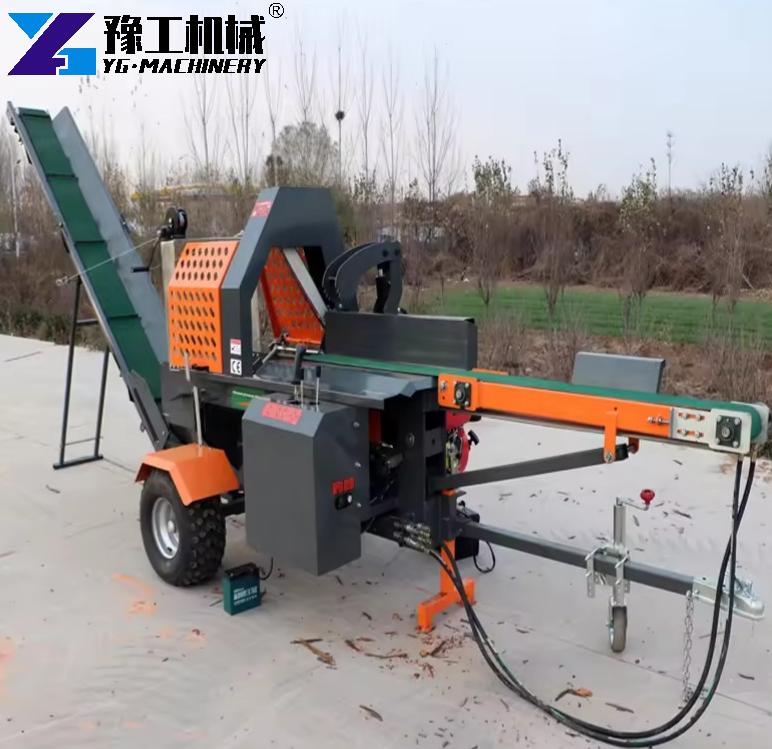
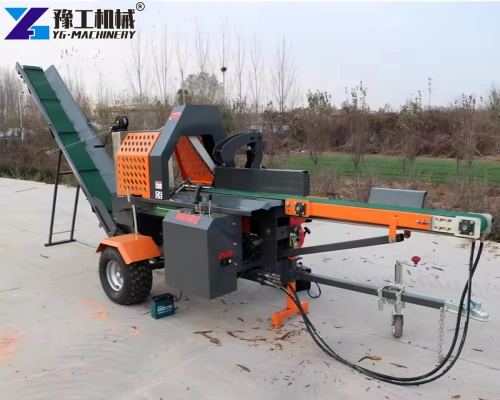
Firewood Processor 20T-Automatic Parameter
| Performance | Max splitting power | 20T |
| Max splitting length | Standard 610mm (24 inch) | |
| Max cutting & splitting diameter | 480mm (19 inch) | |
| Cycle time | 8-12S | |
| Work efficiency | 4-7CBM/H | |
| Wood fixing | Hydraulic | |
| Saw cutting | Joystick with solenoid valve | |
| Saw lubrication | Automatic by hydraulic system | |
| Splitting | Automatic | |
| Splitting wedge | 4 way (height adjustable) | |
| Machine assembly | Engine | 18HP LIFAN gasoline (electric start) |
| Pump | 20GMP (2-stage) | |
| Splitting cylinder | 3.15”x24”x2” | |
| Hydraulic oil tank | 100L | |
| Feeding conveyor | 2400*200mm | |
| Rear loading conveyor | 3200*250mm | |
| Tyre | 22×11-10 | |
| Traction | 50mm ball couple |
Where a 20 Ton Electric Log Splitter Works Best
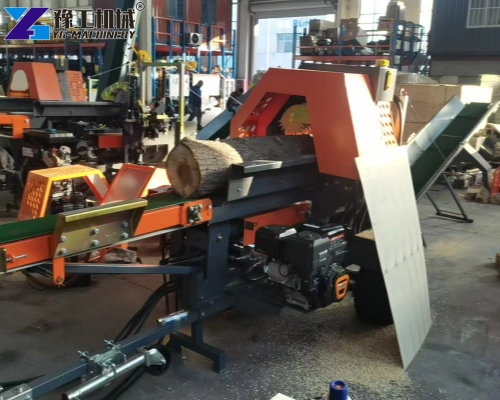
Tip: Electric power is about stability, not mobility.
A 20 ton electric log splitter is used in fixed locations.
Best for:
- Indoor workshops
- Small firewood yards
- Fireplace wood supply
- Light commercial work
Advantages:
- Low running cost
- Low noise
- Easy operation
- Low maintenance
Limits:
- Needs stable power supply
- Not suitable for field work
- Heat buildup under long use
Simple idea: It fits “fixed work”, not “mobile work”.
Where a Diesel Log Splitter Works Better
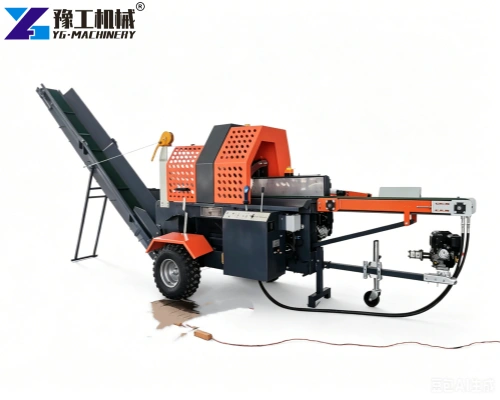
Tip: Diesel systems are built for freedom and load.
A diesel log splitter is designed for outdoor environments.
Best for:
- Farms
- Forestry sites
- Mountain operations
- No-power locations
Advantages:
- No electricity needed
- High mobility
- Better for continuous work
- Strong for large logs
Trade-offs:
- Higher fuel cost
- More maintenance
- Higher noise
Simple idea: It fits “mobile heavy work”.
20 Ton Electric Log Splitter vs Diesel Log Splitter Key Differences
Tip: The real gap is working style, not power.
1. Work Environment
- Electric: fixed site
- Diesel: outdoor/mobile site
2. Operating Cost
- Electric: lower cost
- Diesel: higher fuel cost
3. Flexibility
- Electric: limited by power
- Diesel: fully mobile
4. Maintenance
- Electric: simpler system
- Diesel: more service needs
Common Mistakes in Wood Splitting Machine Selection
Tip: Wrong power choice is more expensive than wrong size.
Common mistakes:
- Using electric machines outdoors
- Using diesel machines in factories
- Ignoring power availability
- Ignoring fuel cost structure
Correct logic:
👉 Check site first
👉 Choose power type
👉 Then choose machine spec
Real Case from Canada
Tip: Winter conditions change everything.
A Canadian buyer named Mark first used a 20 ton electric log splitter. His setup was a fixed workshop.
At first, performance was good:
- Low noise
- Low cost
- Easy operation
But winter changed conditions:
- Power instability
- Higher moisture logs
- Lower efficiency
Later, he added a diesel log splitter for outdoor pre-processing.
Results:
- 35% higher total output
- Reduced indoor machine load
- Better workflow balance
His comment was simple: “The machine was fine. The setup was not.”
YG Machinery Selection Advice
Tip: Combination often works better than single choice.
We recommend:
20 Ton Electric Log Splitter For:
- Fixed workshops
- Small-scale production
- Urban areas
Diesel Log Splitter For:
- Farms
- Forestry sites
- Mobile processing
- Large logs
Selection is not about upgrading. It is about matching.
A 20 ton electric log splitter fits light duty work.
A 50 ton log splitter fits heavy commercial production.
Neither is better. Only suitable matters.
If you are comparing options like 20 ton log splitter for sale or larger machines, always start from your real log size and production demand.