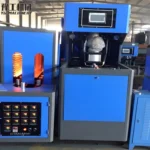

For bottled water producers, choosing the right water bottle blowing machine means balancing production capacity, bottle design, labor costs, and investment. The machine should meet current demand while allowing room for future growth.
This guide explains how to compare machine configurations, estimate output, and select equipment for drinking water bottle production. It also examines the equipment selection process for a Mexico-focused production project.
Key Performance Parameters of Water Bottle Blowing Machine
| Water Bottle Blowing Machine | YG-2L-2 | YG-2L-4 | YG-2L-6 | YG-2L-8 |
| Cavity | 2 | 4 | 6 | 8 |
| Theory output | 2000-2700 | 4000-5000 | 6000-7200 | 8500-9000 |
| Max. volume | 2L | 2L | 2L | 2L |
| Bottle mouth maximum overall diameter | 80mm | 28-38mm | 28-38mm | 28-38mm |
| Bottle biggest diameter | 100mm | 100mm | 100mm | 100mm |
| Bottle maximum height | 330mm | 330mm | 330mm | 330mm |
| Light tube quantity | 16pcs | 40pcs | 64pcs | 32pcs |
| Light tube power | 1.5KW | 1.5KW | 1.5KW | 1.5KW |
| Maximum heating power | 24KW | 40KW | 80KW | 80KW |
| All-electric machine installation | 26KW | 60KW | 85KW | 85KW |
| Actual consumption | 19KW | 30KW | 40KW | 40KW |
| Work pressure | 7-9kg/c㎡ | 7-9kg/c㎡ | 7-9kg/c㎡ | 7-9kg/c㎡ |
| Low-pressure gas consumption | 1000L/min | 1600L/min | 1600L/min | 1600L/min |
| Blow bottle pressure | 25-35kg/c㎡ | 25-35kg/c㎡ | 25-35kg/c㎡ | 25-35kg/c㎡ |
| Higher-pressure gas consumption | 1500Ltr/min | 3000Ltr/min | 4000Ltr/min | 4800Ltr/min |
| Work pressure | 5-6 kg/c㎡ | 5-6 kg/c㎡ | 5-6 kg/c㎡ | 5-6 kg/c㎡ |
| Temperature range | 10℃ | 10℃ | 10℃ | 10℃ |
| Consumption | 5000kcal/hr | 8000kcal/hr | 8000kcal/hr | 12000kcal/hr |
| Frozen water flow | 30L/min | 88L/min | 88L/min | 88L/min |
| Size of the machine | 2.5*1.6*1.7 m | 4.5*2.0*2.3 m | 6.5*2.0*1.9 m | 6.7×2.0×2.3m |
| Weight of the machine | 2.0ton | 4.0ton | 5.5ton | 6.0ton |
- Heating accuracy ±1–2°C
- Air pressure 25–40 bar stability
- Neck compatibility range
- Cooling efficiency
- Cycle time 2.5–3.5 sec
💡 Tech note: pressure fluctuation over 2 bar affects bottle shape.
How to Choose a Water Bottle Blowing Machine

Start with your bottle specifications and production targets. These details help determine the machine configuration you need.
- Bottle capacity: Common requirements include 500ml, 1L, and 1.5L bottles.
- Bottle design: Shape, weight, neck size, and wall thickness affect production.
- Required output: Estimate hourly and daily bottle demand.
- Automation level: Compare semi-automatic and fully automatic equipment.
- Expansion plans: Consider whether you will add bottle sizes or increase output.
A drinking water bottle making machine should match the actual bottle design and preform specifications. Choosing equipment based on capacity alone can lead to an unsuitable configuration.
Compare Bottle Blowing Machine Output

Production capacity is a key factor when comparing equipment. Different cavity configurations support different output requirements.
| Machine Configuration | Reference Output for 500ml Bottles |
|---|---|
| Fully automatic, 1-in-2 | 1,600–2,200 bottles/hour |
| Fully automatic, 1-in-4 | 3,500–5,000 bottles/hour |
| Fully automatic, 1-in-6 | 5,500–7,000 bottles/hour |
When comparing quotations, ask suppliers to confirm the expected output for your specific bottle. A higher cavity count does not automatically guarantee the best operating cost.
For buyers comparing a 500ml bottle making machine, it is important to confirm bottle weight, preform compatibility, and actual output before selecting a configuration.
Semi-Automatic vs. Fully Automatic Machines
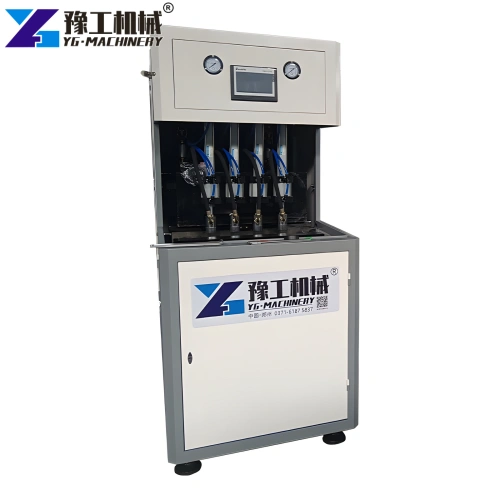
A semi-automatic bottle blowing machine may suit smaller production volumes, limited budgets, or businesses entering the bottled water market. It generally requires more manual handling during production.
A fully automatic pet bottle blowing machine is worth considering when production demand is steady and output requirements are higher. Automation can reduce manual handling and support a more continuous production process.
For producers supplying several filling lines, a fully automatic configuration may be appropriate. Smaller operations should compare equipment costs, labor requirements, available space, and expected orders before deciding.
Mexico Customer Technical Upgrade Case

Customer Carlos used a basic plastic bottle moulding machine.
Issues:
- unstable 1800 BPH
- pressure fluctuation
- uneven bottle base
Upgrades:
- stable air compressor system
- cooling optimization
- heating zone tuning
Results:
- 4200 BPH output
- 30% scrap reduction
- 18% energy saving
Customer said:
“Line is stable now. No more pressure drops.”
💡 Tech note: most issues come from air system.
What Should Buyers Confirm Before Ordering?
| Item to Confirm | Why It Matters |
|---|---|
| Bottle capacity and weight | Affects forming conditions and machine selection |
| Bottle shape and neck size | Helps determine mold and preform compatibility |
| Required hourly output | Guides the choice of machine configuration |
| PET preform specifications | Affects heating and blowing performance |
| Factory power supply and space | Supports production planning |
| Future expansion plans | Helps assess additional capacity needs |
Export buyers should also confirm packaging, shipping arrangements, spare parts, and technical specifications before placing an order.
Water Bottle Blowing Machine Frequently Asked Questions
The range depends on the machine, mold, and material compatibility. PET is commonly used for drinking water bottles. Confirm your bottle design and preform specifications before ordering.
The right choice depends on output targets, working hours, and budget. A two-cavity configuration may suit lower demand, while a four-cavity configuration supports higher reference output. Confirm performance against your actual bottle design.
Not necessarily. Fully automatic equipment may suit stable, high-volume production. A semi-automatic machine may be more practical for smaller operations with limited budgets.
Request a Water Bottle Blowing Machine Quote
Planning a bottled water production line in Mexico or another market? Share your bottle capacity, design, target output, and preform specifications with YG Machinery.
Our team can assess suitable machine configurations and provide a quotation based on your production requirements. Clear specifications help you compare options and plan a more efficient bottle production line.