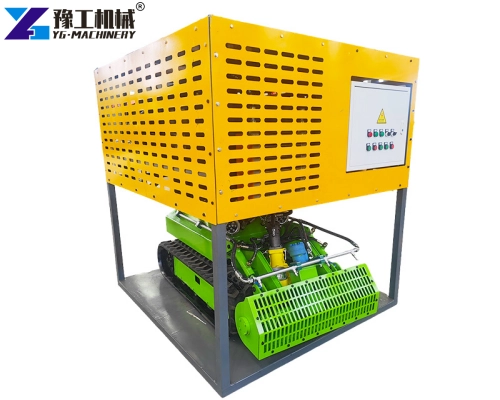
Do not start with sewer cleaning robot size or motor power. Start with your working conditions. For overseas projects, I usually ask six questions first:
- What is your material?
- What is your required capacity?
- What is your working environment?
- What power source is available?
- What output or working depth is required?
- What budget range is realistic?
These answers usually define the right equipment direction.
💡 Tip: Do not just say, “I need a sewer cleaning robot.” Send these six details first.
1. What Is Your Material?
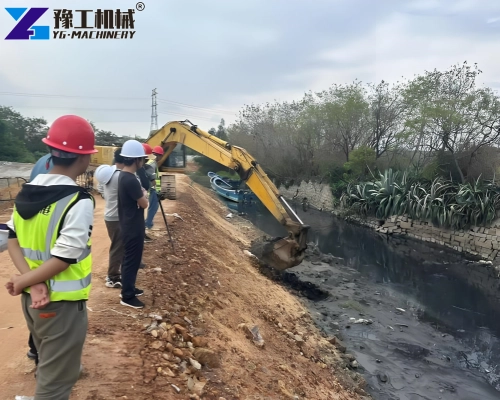

Material is the first selection filter.
If your material is pumpable sludge → Then consider a standard suction configuration. This suits urban wastewater, manholes, and some settling tanks. The suction system needs enough sludge fluidity to work properly.
If your material is thick but still movable → Then consider water-assisted suction.
A high-pressure water system can help. Water loosens or dilutes the sludge before suction.
If your material is hardened sludge → Then do not rely on direct suction.
Very thick or hardened sludge cannot be sucked directly. It needs breaking, dilution, or pre-treatment first.
If your material contains large rocks → Then pre-remove the rocks.
Large particles can block the suction hose. They may also damage the pump.
Therefore, a sludge cleaning robot should not be selected by sludge name alone. Fluidity and particle size matter more.
2. What Is Your Required Capacity?
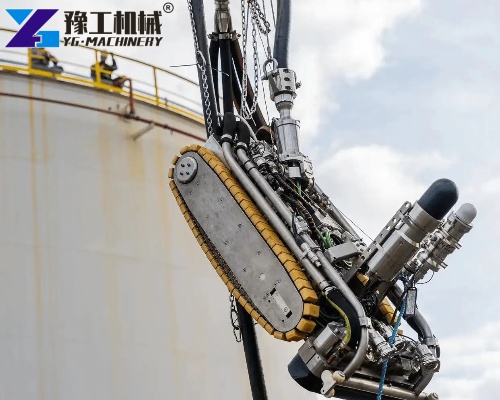
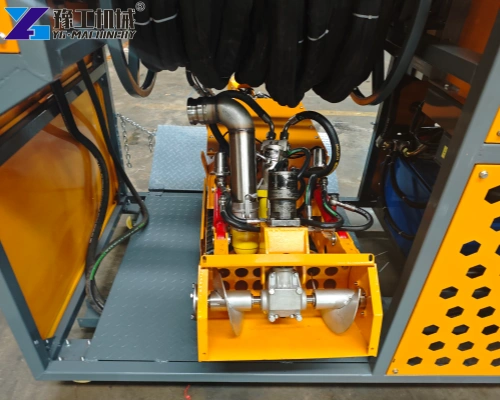
Capacity determines the suction system size. Common project targets include 100, 150, or 200 m³/h. Higher targets need a full pump and pipeline calculation.
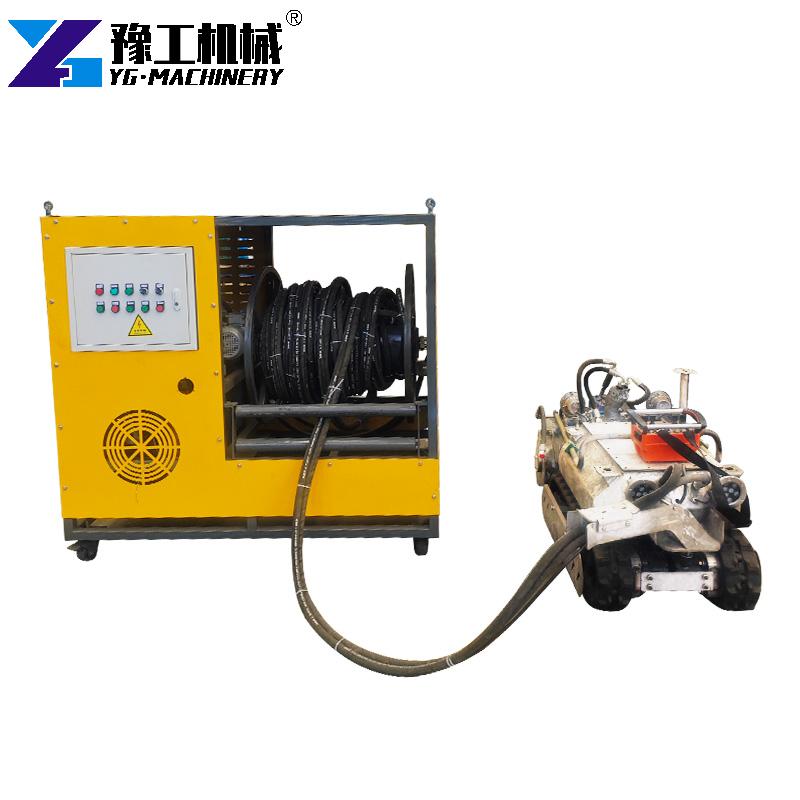
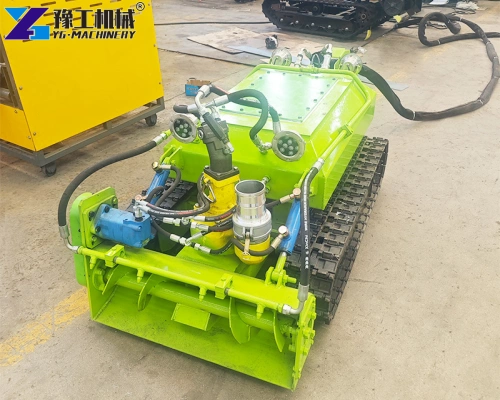
Sewer Cleaning Robot Parameter
| Model | YG-500 | YG-600 | YG-700 | YG-800 | YG-900 | YG-1200 |
| Robot Size | 1500*500*650mm | 1500*600*650mm | 1600*700*650mm | 1600*850*700mm | 1650*960*750 | 1900*1200*750 |
| Dredging Width | 500mm | 600mm | 700mm | 800mm | 900mm | 1200mm |
| Track Travel Speed | 3-15m/s | 3-15m/s | 3-15m/s | 3-15m/s | 3-15m/s | 3-15m/s |
| Water Pump Flow Rate | 100 cubic meters | 100 cubic meters | 160 cubic meters | 160 cubic meters | 200 cubic meters | 200 cubic meters |
| Water Pump Head | 0-30m | 0-30m | 0-25m | 0-25m | 0-25m | 0-25m |
| Hydraulic Station Dimensions | 2200*1200*1700 | 2200*1200*1700 | 2200*1200*1700 | 2200*1200*1700 | 2200*1200*1700 | 2120*1240*1200 |
| Main Motor Power | 18kw | 18kw | 22kw | 22kw | 22kw | 45kw |
If you need about 100 m³/h → Then start with a smaller system.
This suits small wastewater pits and maintenance projects. The equipment is also easier to place in narrow areas.
If you need 150–200 m³/h → Then prioritize pump stability.
This range suits many municipal and industrial projects. Do not judge the pump by theoretical flow alone.
If your target exceeds 200 m³/h → Then check the whole pumping system.
Check hose diameter, pumping distance, and sludge condition. Otherwise, theoretical flow may not become real output.
Tip: Tell the supplier your target m³/h. “Strong suction” is too vague.
3. What Is Your Working Environment?
The environment determines whether the robot can enter.
If the jobsite is a narrow sewer → Then choose a compact configuration.
Measure the smallest entrance first. Typical projects may require 600, 800, or 900 mm widths.
If the tank opening is larger → Then a wider configuration may work.
For example, 1200 or 1500 mm openings allow larger platforms. However, do not choose an oversized robot without checking access.
If the site contains flammable gas → Then consider explosion-proof equipment.
Oil, chemical, and industrial wastewater sites may require this option. Final selection must follow local safety rules.
If the site is submerged → Then consider an underwater configuration.
Check water depth, sludge thickness, and remote control distance.
💡 Tip: Measure the smallest opening. Tank diameter comes second.
4. What Power Source Is Available?
Power availability directly affects configuration.
If three-phase electricity is available → Then consider the electric version.
Electric models suit fixed project sites. They can also simplify operating cost control.
If electricity is unavailable → Then consider the diesel version.
Diesel power suits remote construction sites. However, purchase and running costs can be higher.
If the site has strict emission limits → Then check electric options first.
Underground and indoor sites may restrict exhaust emissions. Electric power is often easier to manage there.
💡 Tip: Confirm voltage and power capacity before discussing motor size.
5. What Output or Working Depth Do You Need?
Depth and output should be checked together. YG Machinery systems can work at about 10–30 m underwater. Actual depth depends on site conditions and system configuration.
If working depth is below 10 m → Then focus on access and capacity.
Depth may not be your main limitation. Entrance size and sludge condition may matter more.
If depth approaches 20–30 m → Then check the complete system.
Check hydraulic lines, discharge hoses, controls, and pumping conditions. Do not judge depth from robot specifications alone.
If you need high output at deep depth → Then request a project calculation.
Greater depth can change real pumping conditions. A full parameter review is safer.
💡 Tip: Give depth, pumping distance, and target flow together.
6. What Budget Range Is Realistic?
Budget should come after technical requirements.
If your budget is limited → Then focus on the core cleaning function.
Prioritize the robot, hydraulic system, and suction system. Optional equipment can come later.
If daily workload is high → Then prioritize system reliability.
Downtime can cost more than the initial price difference. Focus on pumps, hydraulics, and wear parts.
If the machine will serve multiple projects → Then consider flexibility.
Different entrances, sludge types, and depths may need different setups. Higher utilization can justify extra configuration.
For a water tank cleaning robot or industrial tank project, use the same logic. Check material, access, depth, and capacity first.
What Should You Send Before Asking for a Quote?
If you plan to buy a sewer cleaning robot, provide:
- Material type
- Sludge thickness
- Required capacity
- Tank or sewer opening
- Working depth
- Pumping distance
- Largest solid particle
- Power source
- Working environment
- Expected working hours
This information helps determine the correct configuration. For industrial tanks, also mention oil, chemicals, gas, or explosion-proof requirements.
For underwater sediment, provide water depth and sludge thickness.