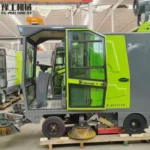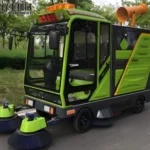
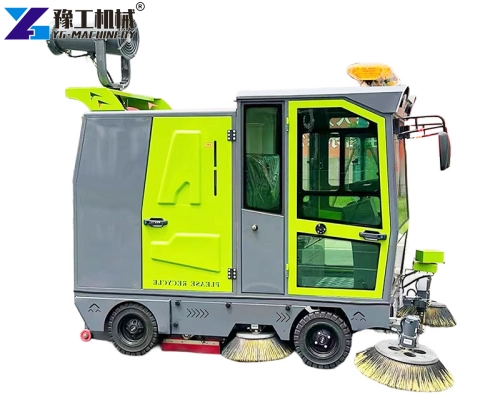
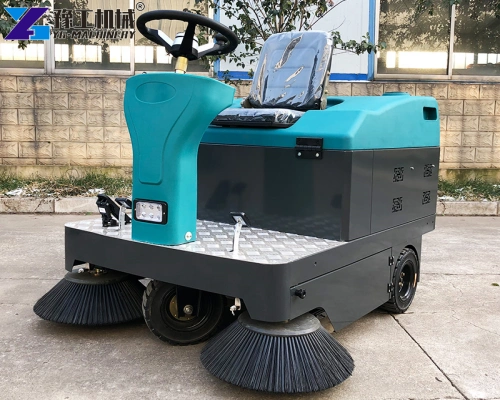
A street sweeper machine is not equally suitable for every road or cleaning condition. Surface type, debris, moisture, access space, and cleaning frequency all affect results. A machine that works well on a paved factory road may be a poor choice for loose gravel or heavy wet sludge. The right approach is to match the machine to the actual jobsite first.
Is a Street Sweeper Machine Suitable for Paved Streets?
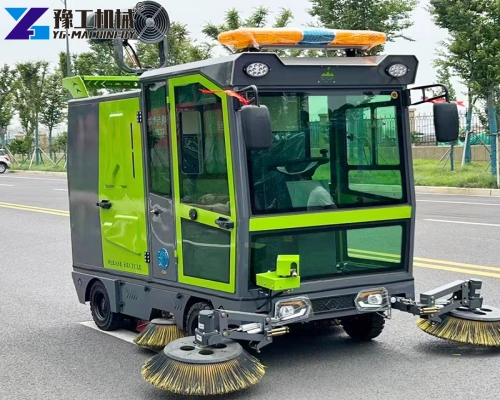
Recommended: Suitable
Paved streets are one of the most suitable conditions for a street sweeping machine. Asphalt and concrete provide a relatively stable surface for rotating brushes to collect dust, sand, leaves, and ordinary road debris.
A ride-on configuration can also cover large areas more efficiently than manual sweeping. For example, YG-2000 has a 2,200 mm sweeping width and a stated working efficiency of 22,000 m²/h.
Required configuration:
Choose suitable main and side brushes for the debris type. Water spraying can also help control airborne dust during dry sweeping.
Important limitation:
The stated working efficiency is not the same as guaranteed daily output. Traffic, debris volume, turning, stopping, and surface conditions can reduce actual productivity.
Can It Clean Parking Lots and Paved Open Areas?

Recommended: Suitable
Parking lots, commercial yards, and other paved open areas are strong applications for a street cleaning machine. These sites often have large continuous surfaces with dust, leaves, paper, and small amounts of loose dirt.
A ride on street sweeper is useful when the operator needs to cover a large area while maintaining a consistent sweeping path. A machine with side brushes can also reach closer to edges and curbs.
Required configuration:
Consider sweeping width, turning space, waste capacity, and water capacity according to the site.
Important limitation:
A wide machine is not automatically better. Tight parking layouts may require a more compact body and smaller turning radius.
Is It Suitable for Factory Roads and Industrial Yards?

Recommended: Suitable with the right configuration
Factory roads can contain dust, sand, packaging waste, leaves, and other light debris. A road sweeper machine can handle these conditions when the surface is reasonably firm and the debris is within the machine’s collection capability.
Industrial sites need more attention to dust and debris volume than ordinary streets. Frequent cleaning may also make waste-bin capacity and working hours more important than maximum sweeping speed.
Required configuration:
Match brush selection, filtration, waste capacity, and water supply to the actual factory environment.
Important limitation:
Do not assume a sweeper can collect every industrial material. Large metal pieces, sharp waste, heavy chunks, and sticky substances may require manual removal or another machine.
Can It Handle Sand, Dust, And Loose Dirt?
Recommended: Suitable with the right configuration
Dry sand and road dust are common targets for a ride on road sweeper, especially on paved roads and hard compacted surfaces. Brush systems can move loose particles toward the collection system while water spraying can reduce dust during operation.
For very dusty sites, dust-control performance may matter more than headline sweeping speed.
Required configuration:
Consider a suitable dust-control system and water tank capacity. YG-2000, for example, has a 100 L water tank and two 550 mm side brushes.
Important limitation:
Very deep loose material can behave differently from a thin layer of road dust. If sand has accumulated heavily, preliminary removal may be necessary.
Can It Clean Leaves and Light Organic Debris?

Recommended: Suitable
Leaves, small twigs, paper, and similar light debris are generally suitable for mechanical sweeping on paved surfaces. This makes a electric road sweeper an option for sites where low-noise operation and routine cleaning are important.
However, seasonal leaf cleaning can create a much larger waste volume than ordinary dust sweeping.
Required configuration:
Prioritize adequate waste-bin capacity and brush coverage. A machine with a larger collection capacity can reduce the frequency of emptying during long cleaning shifts.
Important limitation:
Wet leaves can become heavier and stick together. Performance may drop when debris is heavily soaked or compacted.
Can a Street Sweeper Machine Work on Wet or Muddy Surfaces?
Recommended: Suitable with the right configuration
Lightly wet paved surfaces may be manageable, but wet conditions change how debris moves through the brush and collection system. Mud is more difficult because it can stick to surfaces instead of behaving like loose dust.
A road cleaning machine should therefore be selected according to the actual moisture and debris conditions rather than the road name alone.
Required configuration:
Confirm brush design and collection performance for the expected wet conditions. Check the manufacturer’s recommendations before using the machine in unusually wet areas.
Important limitation:
Heavy mud, standing water, or thick sludge should not be treated as ordinary sweeping conditions. These materials may require washing, vacuuming, or dedicated sludge-handling equipment.
Should You Use It on Loose Gravel or Rough Surfaces?
Recommended: Not recommended for every condition
Loose gravel requires more caution than a normal paved road. Brushes may move stones rather than simply collecting fine debris. Large stones can also create mechanical or collection problems.
A road sweeper for sale should therefore be evaluated against the actual surface before purchase if your site contains significant loose aggregate.
Required configuration:
Confirm the allowable debris size, brush design, and surface compatibility with the supplier.
Important limitation:
Heavily uneven ground, deep loose gravel, construction rubble, and large rocks are not normal street-sweeping conditions. A dedicated cleaning or material-handling solution may be more appropriate.
What Conditions Should You Check Before Choosing?
Before buying, check these five factors:
- Surface: Asphalt, concrete, paving blocks, gravel, or uneven ground?
- Debris: Dust, sand, leaves, paper, stones, mud, or mixed waste?
- Moisture: Is the material dry, damp, or heavily wet?
- Area: How many square meters must be cleaned each day?
- Access: Are there narrow lanes, parked vehicles, curbs, or tight turns?
These details are more useful for equipment matching than simply saying, “I need a street sweeper.”
Quick Material Compatibility Guide
| Material / Condition | Recommendation | Main Point to Check |
|---|---|---|
| Paved streets | Suitable | Sweeping width and brush coverage |
| Parking lots | Suitable | Turning space and waste capacity |
| Factory roads | Suitable with the right configuration | Dust and debris type |
| Sand and road dust | Suitable with the right configuration | Dust control and brush setup |
| Leaves and light debris | Suitable | Collection capacity |
| Wet or muddy surfaces | Suitable with the right configuration | Moisture and debris behavior |
| Loose gravel / rough ground | Not recommended for every condition | Surface and stone size |
The key is simple: match the street sweeper machine to the surface and debris before comparing models or prices. If your site has mixed conditions, provide the road surface, debris type, cleaning area, required working hours, and access limitations.
Need help choosing the right configuration? Contact YG Machinery with your site details. We can recommend a suitable machine and provide a quotation based on your actual cleaning conditions.