

Choosing a ride on road sweeper depends on more than cleaning width. The right machine should match your site size, surface, daily workload, access conditions, and available power. Use the decision paths below to determine which specifications matter most before requesting a quotation.
Do You Need a Ride On Road Sweeper?
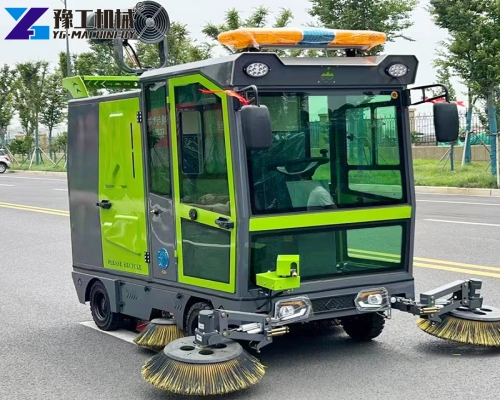

If manual sweeping takes too much labor or time → consider a ride-on machine.
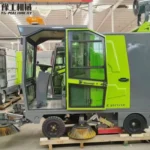
A ride on sweeper lets one operator control sweeping while driving the machine. It is useful for larger outdoor areas where walking-behind equipment becomes slow or tiring.
If your cleaning area is small and has many narrow passages → compare a compact or mini machine first. A ride-on model is most useful when productivity matters more than ultra-small dimensions.
What Cleaning Width Do You Need?

If you need to cover a large area quickly → prioritize cleaning width and working efficiency.
A wider brush can cover more ground per pass. However, wider is not always better if the site has narrow lanes, parked vehicles, or tight turning areas.
For example, the YG-2000 has a 2,200 mm sweep width and a stated working efficiency of up to 22,000 m²/h. The YG-2500 has a 2,500 mm cleaning width and a stated efficiency of 20,000–35,000 m²/h.
If You Work for Several Hours, What Should You Prioritize?
If daily cleaning requires several continuous hours → prioritize operating time and power capacity.
The YG-2000 uses a 48V 150Ah power system and provides a stated continuous working time of 6–8 hours. This can be useful for sites that need extended cleaning without frequent interruptions.
If your working schedule changes from day to day → compare operating time with charging or refueling arrangements. A machine that fits your daily schedule can be more practical than one with a higher headline efficiency.
If the Jobsite Is Narrow, Which Sweeper Should You Choose?
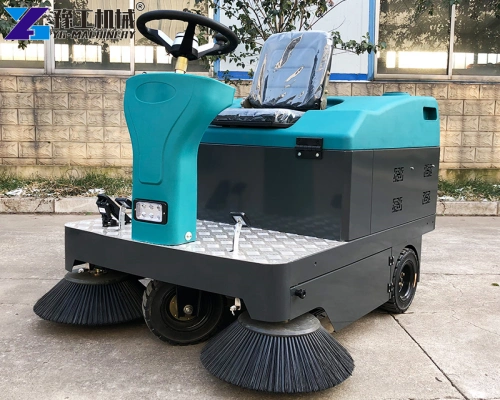
If the jobsite has narrow access routes or limited storage space → consider a compact road sweeper.
Cleaning width should be considered together with machine dimensions and maneuverability. A very wide machine may reduce the number of passes but become difficult to operate around buildings, vehicles, or restricted entrances.
If your site has especially tight spaces → compare a mini configuration before choosing a larger ride on sweeper machine.
If You Clean Parking Lots, What Matters Most?
If your main task is parking lot cleaning → prioritize maneuverability, side-brush coverage, and debris capacity.
A parking lot sweeper must work around parked vehicles, corners, curbs, and changing traffic conditions. Side brushes are especially important because they help collect debris near edges that the main brush may not reach efficiently.
For example, the YG-2000 has two 550 mm side brushes and a 260 L trash capacity. These specifications are more relevant to parking-lot selection than simply comparing motor power.
If You Clean Factories, Which Specifications Matter?
If you clean factory yards or industrial outdoor areas → prioritize hopper capacity, filtration, working time, and cleaning efficiency.
An industrial road sweeper may encounter more dust and debris than a light-duty commercial site. Frequent hopper emptying can reduce productive working time, so debris capacity should match the site’s daily workload.
If dust control is important → also check the machine’s filtration and water-system configuration. The YG-2500, for example, has a 10 m² vacuum filtration area and a 300 L water tank.
If the Machine Must Work Without Frequent Charging, What Should You Check?
If your site requires long operating periods → check the complete power and operating-time specification, not motor power alone.
A road sweeper machine with a powerful drive motor may still be unsuitable if its available operating time does not match your work schedule. Battery capacity, machine load, driving conditions, and cleaning intensity can all affect actual runtime.
If electric operation is preferred → compare an electric road sweeper based on runtime, charging arrangements, working environment, and required productivity.
When Should You Consider a Different Type of Sweeper?
If your site is very small → consider a mini or compact sweeper.
If the site requires long daily cleaning → prioritize operating time and debris capacity.
If access routes are narrow → prioritize machine dimensions and maneuverability.
If the area is large and open → prioritize cleaning width and working efficiency.
If the machine will work in factories → prioritize filtration, hopper capacity, and continuous productivity.
If you are still comparing equipment → review available road sweeper for sale options only after defining these requirements.
Ride On Road Sweeper Selection Decision Tree
1. How large is your cleaning area?
- Small → consider compact or mini equipment.
- Medium to large → continue with a ride-on option.
- Very large → prioritize cleaning width and working efficiency.
2. How long must it operate each day?
- Short shifts → standard operating time may be sufficient.
- Several hours → prioritize battery capacity and runtime.
- Long continuous work → compare runtime with your actual cleaning schedule.
3. What is the site like?
- Parking lot → prioritize maneuverability and side brushes.
- Factory or industrial yard → prioritize filtration and debris capacity.
- Open roads or large yards → prioritize cleaning width and efficiency.
- Narrow areas → consider a compact configuration.
4. What power system fits your site?
- Electric operation preferred → compare runtime and charging conditions.
- Longer or variable work periods → evaluate the complete power configuration.
5. What should you do before requesting a quote?
Prepare your cleaning area, surface type, daily working hours, required cleaning width, access conditions, and preferred power source. These details allow a supplier to recommend a configuration instead of quoting an unsuitable machine.
How Can You Get the Right Ride On Road Sweeper?
The right ride on road sweeper is the one that matches your actual workload rather than simply having the largest specifications. If you share your cleaning area, surface, daily working hours, required width, and site conditions with YG Machinery, we can help match the suitable configuration and provide a quotation.