

Buying a rebar straightening machine can feel confusing at first. A supplier may list speed, accuracy, steel grade, and control system. But what do those numbers mean on the factory floor?
The key is simple: do not judge a machine by its highest number alone. Maximum specification and normal working performance are not the same thing. This guide explains the main specifications in plain English.
Rebar Straightening Machine Parameter
| Performance of straightening machine | YG-3-10 | YG-4-10 | YG-5-12 | YG-8-14 | YG-10-16 | YG10-16 | |
| Straightening the diameter of reinforcing bars | Cold-rolled plain round/cold-rolled ribbed steel bars CRB550 | 3-10MM | 4-10MM | 5-12MM | 6-12MM | 8-14MM | 10-16MM |
| High-ductility cold-rolled ribbed steel bars CRB600H | 3-9MM | 4-9MM | 5-11MM | 6-12MM | 8-14MM | 10-16MM | |
| Hot-rolled plain round steel bars HPB235/300 | 5-10MM | 5-10MM | 6-12MM | 6-12MM | 8-14MM | 10-16MM | |
| Hot-rolled ribbed steel bars HRB335400 | 5-8MM | 5-8MM | 6-10MM | 6-12MM | 8-14MM | 10-16MM | |
| Straightening length | 0.6-12m Can be lengthened or shortened | ||||||
| Straightening speed (variable speed, three speed settings) | 70-100-130m/min | ||||||
| Straightness of the straightened rebar | Within less 2mm | ||||||
| Accuracy of the straightened length | within less or more 1mm | ||||||
| Motor power (Servo-controlled shearing) | kw | 18.5+7.5 | 30+7.5 | 37+7.5 | 37+7.5 | 37+7.5 | 45+7.5 |
What Steel Bar Diameter Can the Machine Process?

Parameter: 5–12 mm processing range.
What It Means: This tells you which bar diameters can enter the machine.
Why It Matters: Your material must fit this range. Otherwise, the machine may not work correctly.
When You Need More: Choose a wider range if your factory processes both small wire and larger bars.
Example: The YG5-12 model is designed for steel bars from 5 to 12 mm.
How Fast Does a Rebar Straightening Machine Work?
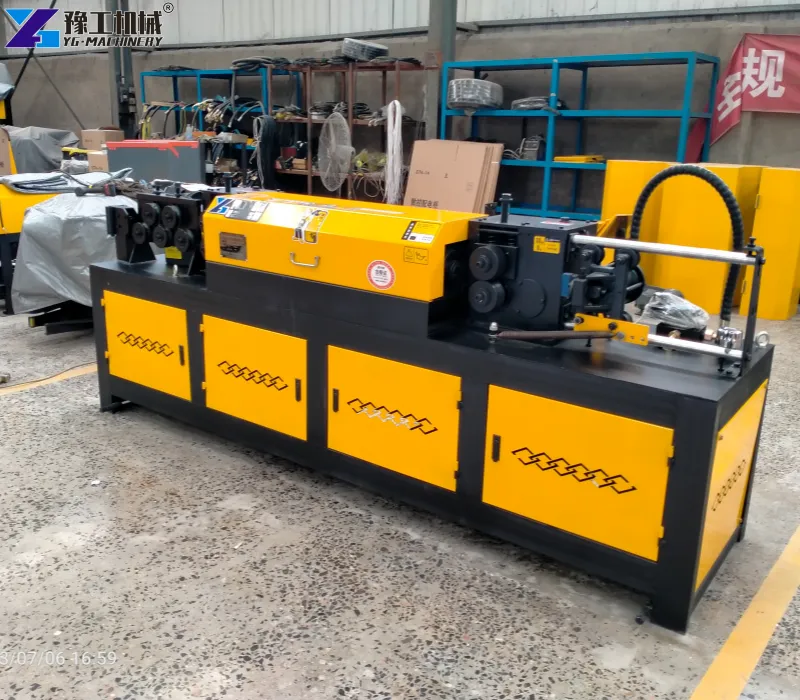
Parameter: 70, 100, and 130 m/min.
What It Means: These numbers show the available straightening speeds.
Why It Matters: Higher speed can increase output. However, speed alone does not define real production.
When You Need More: Choose higher speed when you process large volumes every day.
Example: YG5-12 normally runs at 130 m/min. It can reach 150 m/min with variable-frequency speed control.
Here is the important part: 150 m/min is a maximum working setting, not the speed every job should use.
For bars shorter than two meters, medium or low speed is often better.
Tip: Ask for normal production speed, not only maximum speed.
How Accurate Is the Cutting?
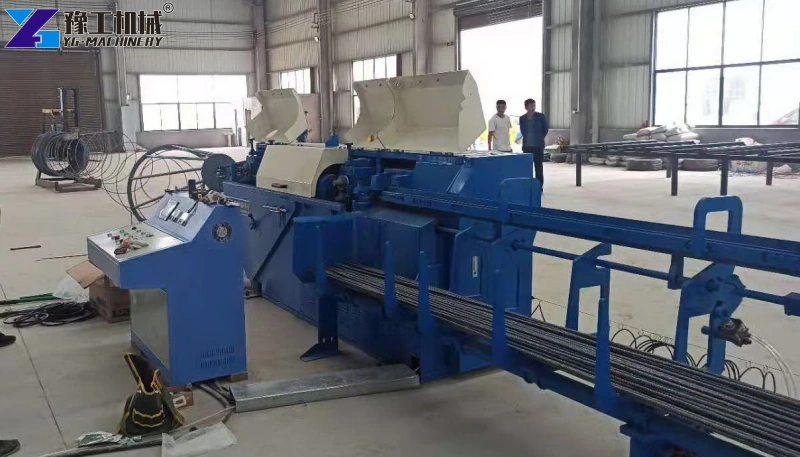
Parameter: Cutting length tolerance ≤ ±1 mm.
What It Means: The finished bar can differ from the target length by no more than about 1 mm.
Why It Matters: Accurate cutting reduces manual correction. It also helps when bars enter welding, tying, or prefabrication work.
When You Need More: Tight tolerances matter more for precast parts and automated production lines.
Example: If the target length is 2,000 mm, a ±1 mm tolerance means the actual length should stay around 1,999–2,001 mm.
How Straight Is the Finished Bar?
Parameter: Straightness ≤ 2 mm/m.
What It Means: After straightening, the bar should not bend more than about 2 mm over one meter.
Why It Matters: A straight bar is easier to place, tie, weld, and feed into the next machine.
When You Need More: High straightness matters when your next process uses automatic feeding.
Example: A bar with poor straightness may look acceptable by eye but still cause trouble in an automated line.
What Steel Materials Can Rebar Straightening Machine Process?
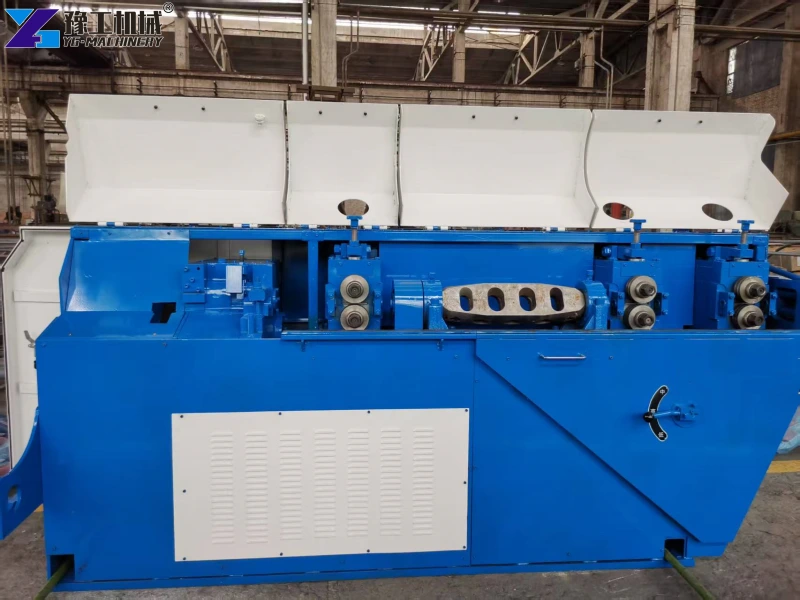
Parameter: Material compatibility.
What It Means: This shows which types of steel bars the machine can straighten and cut.
Why It Matters: Different bars have different surface and mechanical characteristics.
When You Need More: Check compatibility carefully if you buy material from several suppliers.
Example: YG5-12 can process cold-rolled plain bars, cold-rolled ribbed bars, hot-rolled plain bars, and hot-rolled ribbed bars. This flexibility makes the machine useful for construction and steel processing work.
Why Does PLC Control Matter?
Parameter: Siemens PLC and touchscreen control.
What It Means: The PLC acts like the machine’s control brain. It manages settings and operating sequences.
Why It Matters: Simple controls make daily production easier. They also help operators repeat the same settings.
When You Need More: PLC control becomes especially useful for long production shifts.
Example: An operator can set the required cutting length through the touchscreen instead of adjusting several mechanical controls.
Tip: Ask about the PLC brand and spare parts before buying.
Can Rebar Straightening Machine Work With a Production Line?
Parameter: Standalone or online operation.
What It Means: The machine can work alone or connect with another steel processing line.
Why It Matters: Online production can reduce manual handling between processes.
When You Need More: Line integration is useful for factories with steady, high-volume production.
Example: YG5-12 can operate independently. It can also connect with a cold rolling line for online straightening and cutting.
Which Rebar Straightening Machine Specifications Matter Most?
Different buyers should rank specifications differently.
For Small Construction Teams
- Easy operation
- Material range
- Cutting accuracy
- Machine size and installation needs
You may not need the highest speed.
For Rebar Processing Factories
- Normal working speed
- Cutting accuracy
- Straightness
- Continuous running stability
- Material compatibility
Here, output matters more.
For Automated Steel Processing Lines
- Cutting accuracy
- Straightness
- PLC control
- Line integration
- Stable working speed
A high maximum speed means little if the line cannot maintain it.
Tip: Compare machines using your real production conditions. Do not compare one maximum number against another.
How Should You Read Machine Specifications?
A good specification sheet should answer one practical question: Can this machine handle my daily work reliably?
For example, a wire straightening and cutting machine rated at 150 m/min may look faster than one rated at 130 m/min. But if your factory normally runs at 100–120 m/min, that extra number may have little value.
The same logic applies to a rebar straightener or steel bar straightening machine. Look at normal working speed, finished-bar quality, material compatibility, and long-term operation.
The best machine is not always the one with the biggest specifications. It is the one whose specifications match your actual job.