
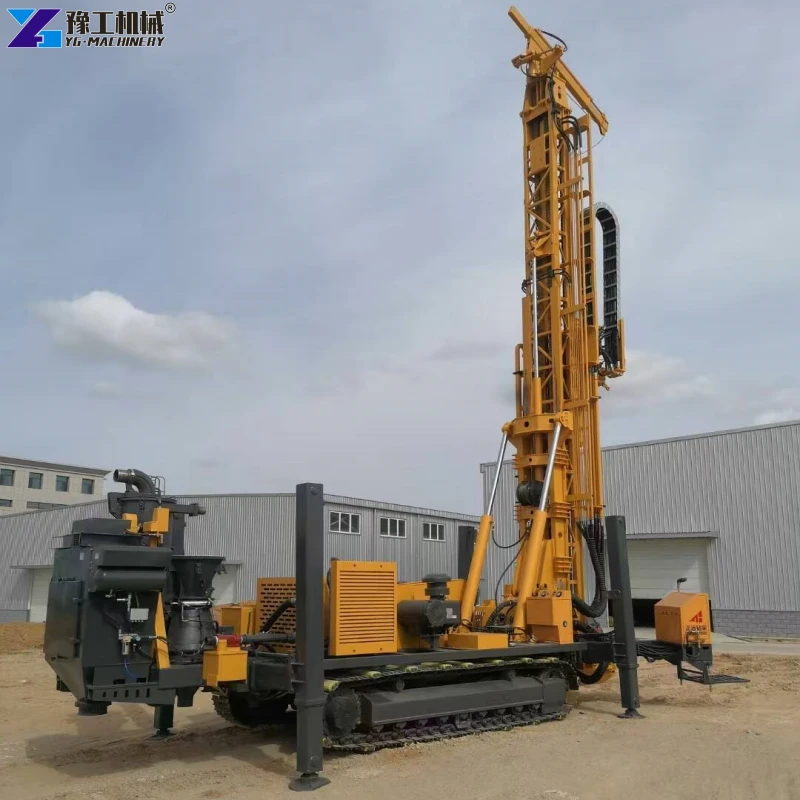
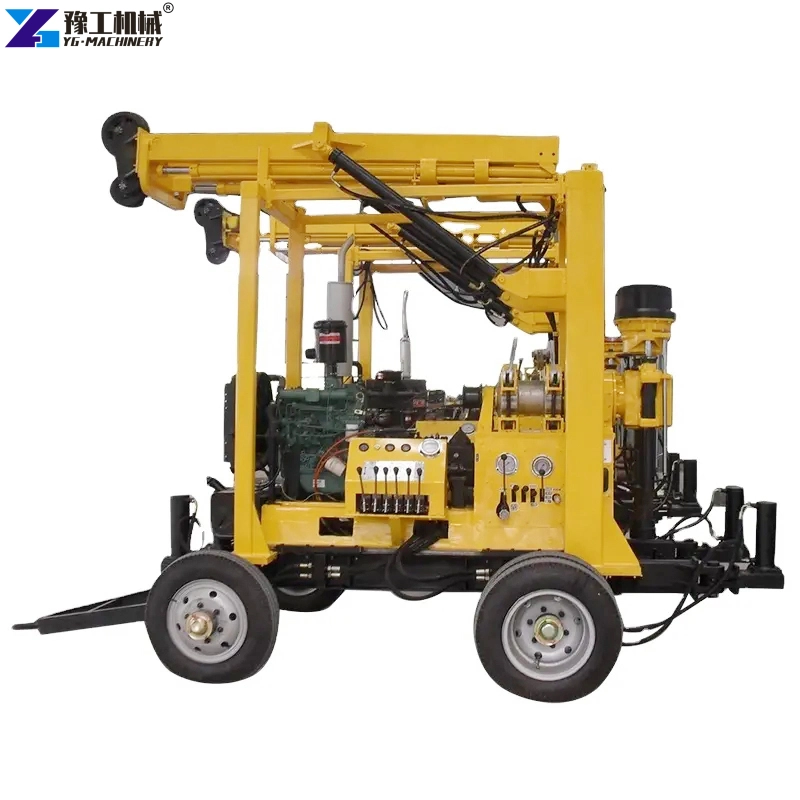
Choosing the right drilling method affects exploration speed, sample quality, and project costs. The main difference in RC drilling vs diamond core drilling is the sample type. Reverse circulation drilling mainly collects rock chips. Diamond core drilling recovers continuous cylindrical core samples.
For projects focused on rapid exploration and rock-chip sampling, an RC drill rig can offer a significant speed advantage. Under suitable geological and operating conditions, RC drilling can reach up to three times the drilling efficiency of diamond core drilling. Actual performance depends on rock formations, hole depth, diameter, rig configuration, and sampling requirements.
| Comparison | RC Drilling | Diamond Core Drilling |
|---|---|---|
| Main sample | Rock chips | Continuous core |
| Main purpose | Rapid exploration and geochemical sampling | Geological structure and mineralization analysis |
| Sampling method | Dual-wall rods and compressed air | Diamond core bit |
| Efficiency focus | Rapid collection of many samples | Detailed core recovery |
| Main cost factors | Rig, compressor, consumables, geology | Rig, diamond tools, core handling, site conditions |
| Best selection basis | Speed and chip-sampling needs | Core integrity and geological detail |
Selection tip: Consider RC drilling when rapid screening is the priority. Choose core drilling when continuous core samples are essential.
Why Can RC Drilling Be Three Times Faster?

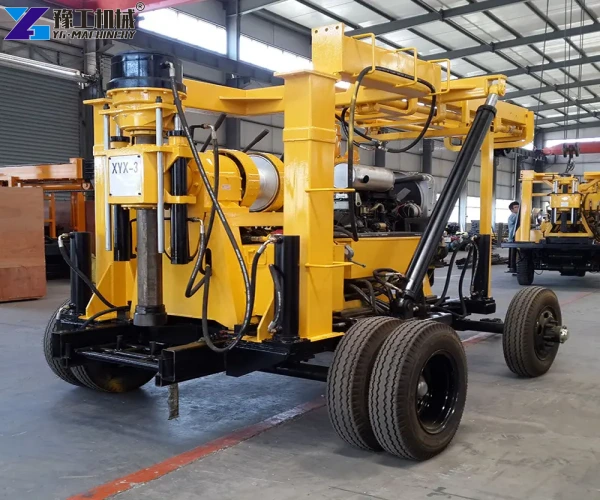
Reverse circulation drilling uses dual-wall drill pipes and compressed air. Air travels down the outer passage and helps return cuttings through the inner tube. A cyclone and sample collection system then separates the cuttings for geological analysis.
This method suits exploration programs that require multiple holes and rapid rock-chip sampling. Compared with operations that recover and handle continuous core, RC drilling can reduce drilling time under suitable conditions.
However, three times faster is not a universal result. Rock hardness, increasing depth, hole stability, compressor performance, and sampling requirements all affect productivity. A fair comparison must use similar hole depths, geological conditions, and measurement methods. Drilling speed alone does not represent total project efficiency.
Selection tip: Ask suppliers for the depth, rock type, hole diameter, and rig configuration behind any efficiency claim.
RC Drilling vs Core Drilling: How Do Costs Compare?

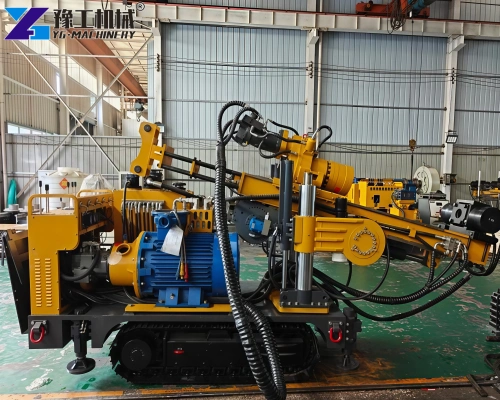
When selecting an RC drill rig, evaluate more than the rig itself. The compressor, air pressure, air delivery, dual-wall rods, RC hammer, bits, and sample collection equipment must match the target depth and ground conditions.
A diamond core drilling rig needs suitable core bits, drill rods, and a core recovery system. If geologists need continuous samples to study mineralized zones or changes in rock structure, core quality may matter more than faster chip collection.
A proper RC drilling vs core drilling cost comparison should include equipment, consumables, labor, fuel or energy, drilling progress, sample handling, and relocation time. A lower cost per meter does not always mean a lower total exploration cost.
Selection tip: Define the required sample type first. Then compare cost per meter and the estimated time to complete the exploration program.
YG Machinery RC Drilling Rig Models and Specifications
| Technical Parameters | unit | YG-400 | YG-500 | YG-600 | YG-800 | YG-1200 |
| Maximum drilling depth | M | 300 | 400 | 500 | 600 | 1000 |
| Drilling diameter | mm | 105-305 | 105-400 | 105-450 | 105-550 | 105-800 |
| Recommended working air pressure | Mpa | 1.2-3.5 | 1.6-6 | 1.6-6 | 1.6-8 | 1.6-8 |
| Recommended gas consumption | m³/min | 16-55 | 16-55 | 16-75 | 16-96 | 16-96 |
| Drill pipe length | m | 3 | 3 | 3 | 6 | 6 |
| Recommended drill pipe diameter | mm | 89/102 | 102/114 | 102/114 | 114/127 | 127/146 |
| Recommended diameter for air reverse circulation double-walled drill pipe | mm | 89/102 | 102/114 | 102/114 | 114/127 | 127/146 |
| Axial pressure | T | 6 | 7 | 7 | 11 | 13 |
| Lifting force | T | 22 | 25 | 29 | 47 | 57 |
| Rapid ascent speed | m/min | 20 | 23 | 29 | 29 | 30 |
| Fast forward speed | m/min | 32 | 33 | 33 | 42 | 44 |
| Maximum rotational torque | Nm | 8000/4000 | 10000/5000 | 12000/6000 | 18000/9000 | 24000/12000 |
| Maximum rotational speed | r/min | 75/150 | 75/150 | 75/150 | 70/140 | 86/172 |
| Small auxiliary hoisting force | T | 1.5 | 1.5 | 2.5 | 2.5 | 2.5 |
| Drilling efficiency | m/h | 10-35 | 10-35 | 10-35 | 10-35 | 10-35 |
| Walking speed | Km/h | 2.5 | 2.5 | 3.5 | 5 | 6.4 |
| External dimensions | m | 6.2*1.85*2.8 | 7*2.1*2.8 | 7*2.1*2.8 | 10.5.*2.25*3.3 | 11.5*2.25*3.4 |
| Adaptation conditions | Loose layers and bedrock | |||||
| Drilling method | Top-drive hydraulic rotation and propulsion, down-the-hole hammer drilling or mud drilling. | |||||
| Optional accessories | Mud pumps, centrifugal pumps, generators, foam pumps | |||||
These are listed product specifications, not guaranteed drilling depths for every formation. Actual performance depends on geology, hole diameter, compressor specifications, and operating conditions. Buyers comparing a diamond core drilling rig or another core drilling rig should also verify effective depth and equipment compatibility.
Selection tip: Share the target depth, hole diameter, geology, sample type, and expected workload when requesting a quotation.
How Should Overseas Exploration Projects Choose a Drilling Method?
In mineral exploration markets such as Guinea, projects may involve gold exploration, open-pit deposits, or other mineralized zones. The right method depends on the geological objective, not simply the country or mineral.
For preliminary exploration, RC drilling may suit programs that need multiple holes and rapid chip analysis. For detailed studies of mineralized boundaries, rock structures, and geological continuity, diamond core drilling may be more appropriate. Some programs use RC drilling for initial screening and then apply core drilling where further geological detail is needed.
FAQs: RC Drilling vs Diamond Core Drilling
No. RC drilling can be faster under suitable conditions, but compressors, rods, hammers, and consumables affect costs. Core drilling costs also depend on depth, core quality requirements, bit life, and core handling.
Conventional RC drilling mainly collects rock chips. If continuous core is essential, evaluate core drilling or confirm whether a specific rig supports another suitable configuration.
Provide the target depth, hole diameter, rock conditions, exploration objective, compressor requirements, and expected workload. Confirm that the rig, rods, hammer, and sampling system are compatible.
Some equipment may support different methods through tool changes or configuration adjustments. This capability is not available on every model. Confirm the exact rig, tooling, and operating requirements with the supplier before purchasing.
Conclusion: Choose the Method That Matches Your Samples
RC drilling vs diamond core drilling is not simply a contest of speed. RC drilling suits projects that prioritize rapid exploration and rock-chip sampling. Diamond core drilling suits projects that require continuous core for detailed geological analysis.
Under suitable conditions, RC drilling may achieve up to three times the drilling efficiency of diamond core drilling. Actual results must be evaluated against site conditions and consistent performance measurements. YG Machinery can help buyers assess RC rig configurations based on target depth, hole diameter, geology, and sampling requirements.
Before purchasing, compare the specifications, sample objectives, and expected operating costs of an RC drilling rig and a core drilling rig to select the right equipment for your exploration program.


