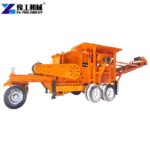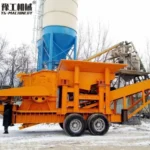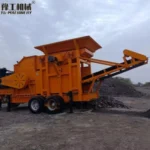
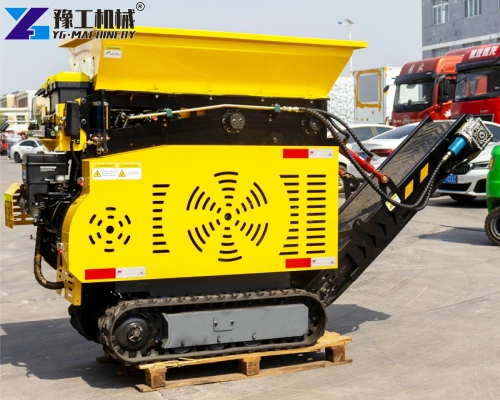
A mobile rock crusher is a crushing machine that combines crushing, feeding, conveying, and mobility functions.
It moves directly to quarries, mines, and construction sites. It processes granite, basalt, limestone, and other rocks on site.
Compared with fixed crushing plants, a mobile rock crusher reduces material transportation distance.
In many quarry projects, transportation can take more than 30% of total production costs.
Therefore, fewer truck trips can improve project profit.
Technical Tip: Do not check price first. Check rock type, feed size, and required output.
Mobile Rock Crusher Parameter
| Model | Feeding Size | Discharging Opening Size | Capacity | Power | Weight | Overall Dimension |
| (mm) | (mm) | (t/h) | (kw) | (t) | (mm) | |
| YG250×400 | ≤210 | 20-60 | 5-21 | 15 | 2.8 | 1300*1090*1270 |
| YG400×600 | ≤340 | 40-100 | 16-64 | 30 | 7 | 1730*1730*1630 |
| YG500×750 | ≤425 | 50-100 | 40-110 | 55 | 12 | 1980*2080*1870 |
| YG600×900 | ≤500 | 65-160 | 50-160 | 55 | 17 | 2190*2206*2300 |
| YG750×1060 | ≤630 | 80-140 | 110-320 | 110 | 29 | 2660*2430*2800 |
| YG900×1200 | ≤750 | 95-165 | 220-380 | 132 | 52 | 3380*2870*3330 |
| YG1000x1200 | ≤850 | 195-265 | 315-500 | 160 | 55 | 3480*2876*3330 |
| YG1200×1500 | ≤1020 | 150-350 | 400-800 | 160-220 | 100.9 | 4200*3300*3500 |
| YG1500×1800 | ≤1200 | 220-350 | 500-1000 | 280-355 | 139 | 5160*3660*4248 |
| YGX150×750 | ≤120 | 18-48 | 8-25 | 15 | 3.8 | 1200*1530*1060 |
| YGX250×750 | ≤210 | 25-60 | 13-35 | 22 | 5.5 | 1380*1750*1540 |
| YGX250×1000 | ≤210 | 25-60 | 16-52 | 30 | 7 | 1560*1950*1390 |
| YGX250×1200 | ≤210 | 25-60 | 20-60 | 37 | 9.7 | 2140*1660*1500 |
| YGX300×1300 | ≤250 | 20-90 | 16-105 | 55 | 15.6 | 2720*1950*1600 |
| YGX500×1500 | ≤3250 | 25-120 | 50-160 | 90 | 20 | 2360*2660*2105 |
| Model | 800×800 | 800×1000 | 1000×1200 | 1200×1200 | 1200×1500 | 1400×1600 |
| Motor Power | 90kw×4G | 110kw×4G | 132kw×4G | 160kw×4G | 185kw×4G | 250kw×4G |
| Diesel Power | 195HP | 195HP | 260HP | 330HP | 330HP | 400HP |
| Hopper | 3500*1800*8mm | 3600*2200*8mm | 3600*2200*8mm | 3800*2200*8mm | 3800*2200*8mm | 4000*2400*10mm |
| Hammerhead Weight | 15kg | 15kg | 20kg | 36kg | 36kg | 55kg |
| Total Weight | 10t | 12.5t | 14t | 19t | 21t | 26t |
| Belt | 7×0.8m | 8×0.8m | 8×1m | 8×1m | 8×1m | 9×1m |
| Belt Conveyor Power | 5.5kw | 5.5kw | 7.5kw | 7.5kw | 7.5kw | 7.5kw |
| Tyre Model×Number | 1100×8pcs | 1100×8pcs | 1100×8pcs | 1000×12pcs | 1100×12pcs | 1100×12pcs |
| Sand Capacity | 30t | 45t | 55t | 65t | 80t | 100t |
| Stone Capacity | 50t | 70t | 80t | 90t | 120t | 180t |
| Overall Size | 10*2.8*3.5m | 11*2.8*3.5m | 11.5*2.8*3.5m | 12*3*3.6m | 12*3*3.6m | 13*3.2*3.7m |
How Does the Structure of a Mobile Rock Crusher Affect Performance?
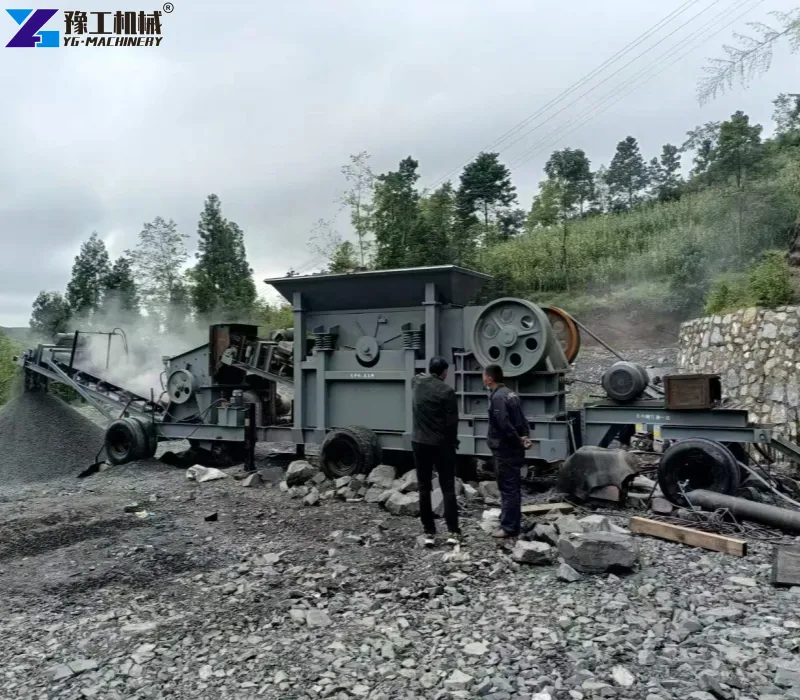
A high-performance mobile rock crusher usually includes a feeding system, crusher unit, conveyor system, power system, and mobile chassis. The crusher unit decides the main performance.
For jaw crushing systems:
- Moving jaw compresses rocks;
- Deep crushing chamber improves feeding;
- Large crushing ratio reduces extra processing.
YG Machinery mobile jaw crusher models can handle feed sizes from about 340mm to 600mm.
Output depends on the model and working conditions.
Performance depends not only on motor power. It also depends on:
- crushing chamber design
- jaw plate wear resistance
- hydraulic adjustment system
- feed size control
Simply:
Power starts crushing. Structure keeps production stable.
Technical Tip: Use stronger wear plates for hard rocks like granite.
How Should You Read Mobile Rock Crusher Specifications?
Many buyers miss important parameters when choosing a mobile rock crusher.
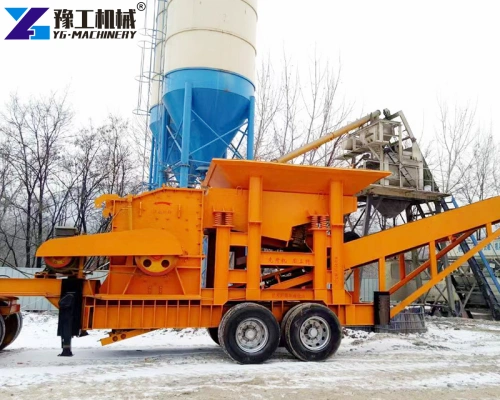
1. Feed Size
Feed size decides what material enters the machine.
Examples:
- ≤340mm for smaller rock crushing;
- ≤600mm for larger rocks.
Oversized rocks may need pre-crushing.
2. Capacity
Capacity is measured in tons per hour.
Common ranges:
- Small: 20-50t/h
- Medium: 50-150t/h
- Large: above 200t/h
Actual output depends on hardness, moisture, and operation.
3. Output Size
Different projects need different aggregate sizes.
Road base usually needs:
20-40mm material.
Concrete production may need finer particles.
Important factors include:
- discharge opening adjustment
- screening system
- output gradation
Technical Tip: Tell suppliers the final application, not only the required tons per hour.
How to Choose a Mobile Rock Crusher for Different Rocks?
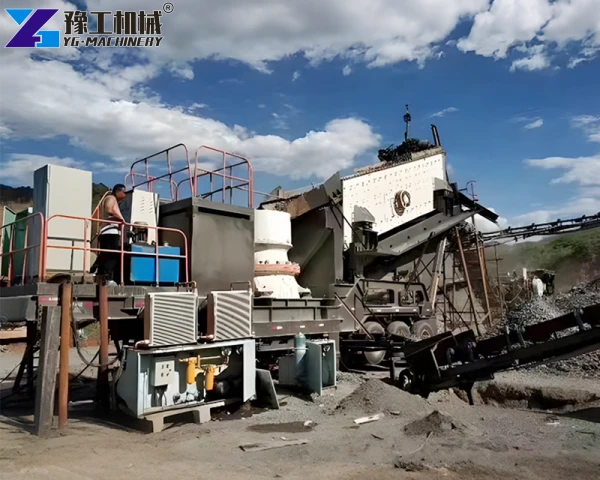
Hard Rock Crushing: Granite and Basalt
Granite and basalt have high strength. Many reach over 100MPa.
These materials require:
- strong crushing chamber;
- wear-resistant parts;
- stable power output.
A mobile rock crusher often uses a portable jaw crusher for primary cr ushing.
Medium Soft Rock: Limestone and Sandstone
Limestone has lower hardness. It usually offers higher crushing efficiency.
These projects focus on:
- stable output;
- energy use;
- product shape.
Construction Waste Recycling
Mobile stone crusher systems are widely used for recycling projects.
They process:
- concrete blocks;
- bricks;
- demolition materials.
On-site crushing reduces waste transport and improves recycled aggregate production.
Technical Tip: Add a magnetic separator when processing reinforced concrete.
What Is the Difference Between Mobile Rock Crusher and Fixed Plants?
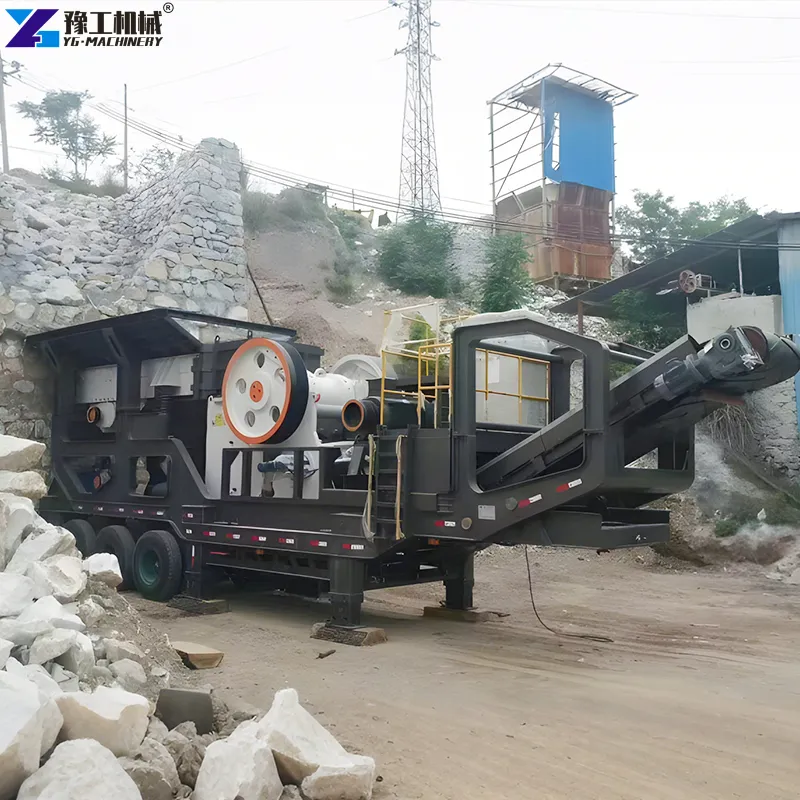
Fixed plants fit large permanent mines.
However, they require:
- concrete foundations;
- fixed locations;
- longer installation time.
A mobile rock crusher fits:
- multiple mining areas;
- temporary projects;
- remote locations.
For example, road projects often change working areas. Mobile equipment follows the project. This is why many buyers searching for mobile crushers for sale care about transport and site flexibility.
Canada Granite Quarry Case: Improving Production Efficiency
Michael managed a quarry project in Alberta, Canada. Before using mobile equipment, the project used fixed crushing equipment. They had three problems:
First, the quarry was far from the processing area.
Second, truck costs kept increasing.
Third, mining areas changed often.
The project later added a mobile rock crusher.
The setup included:
- mobile jaw crusher;
- vibrating feeder;
- conveyor system.
It also used a portable jaw crusher for primary crushing.
After operation:
- Production reached around 60 tons per hour;
- Material transport was reduced;
- Relocation became easier.
Michael said: “The machine works where the rock is. That saves our time.”
For mining projects, this matters. Less waste movement. More efficient production.
Mobile Rock Crusher Technical Q&A
It can process:
granite
basalt
limestone
river stone
concrete waste
Configuration depends on hardness.
Usually 1-2 people. One operates the machine. One checks daily conditions.
It depends on material. Soft rock lasts longer. Hard rock wears faster. Regular jaw plate wear checks are necessary.
Yes. Especially where infrastructure is limited. Diesel models reduce dependence on grid power.
Conclusion: Choosing a Mobile Rock Crusher Is About Matching, Not Only Price
A suitable mobile rock crusher should match:
- rock type;
- production target;
- working environment;
- maintenance ability.
For overseas mining, road, and recycling projects, the biggest value is moving crushing closer to the material. Less transportation. Better efficiency. That is why more contractors choose mobile rock crusher solutions.