Many buyers looking for a hydraulic rock splitter for sale are not simply comparing prices. They are trying to solve a real engineering problem. That was exactly the case for David, a quarry contractor from Arizona, USA.
His team was developing a granite quarry near a highway expansion project. The rock quality was excellent, but the working conditions were difficult. Local regulations limited blasting because of nearby traffic and infrastructure. Hydraulic breakers were slow, and they often damaged valuable stone blocks.
David contacted YG Machinery with one question.
“Can your hydraulic rock splitter really replace blasting for this project?”
The answer came from the project itself.
Rock Splitter Parameter
| Parameter | YG-250 | YG-350 | YG-450 |
| Wedge Length (mm) | 250/520 | 350/620 | 450/720 |
| Piston Stroke (mm) | 90/220 | 90/220 | 90/220 |
| Drilling Depth (mm) | >500 | >700 | >900 |
| Drilling Diameter (mm) | 42 | 46 | 46 |
| Crack Width (mm) | 10-20 | 10-20 | 10-20 |
| Splitting Time (s) | 10-15 | 10-15 | 10-15 |
| Splitting Force (T) | 500 | 800 | 800 |
| Weight (kg) | 25 | 25 | 25 |
Why the USA Quarry Needed a Hydraulic Rock Splitter for Sale
The quarry produced large granite blocks for commercial construction and landscape projects. Every week, the team faced the same problems.
- Hard granite slowed production.
- Blasting permits delayed the schedule.
- Hydraulic hammers created unnecessary fractures.
- Fuel and labor costs kept rising.
David explained during our online meeting,
“We don’t want broken rocks. We need clean blocks that customers can actually use.”
That changed our discussion. Instead of recommending the biggest machine, our engineers focused on the customer’s production goal. We suggested an 800-ton hydraulic splitting system designed for granite.
How YG Selected the Right Hydraulic Rock Splitter
Every quarry is different. Before recommending equipment, our engineers collected several details:
- Granite hardness
- Hole diameter
- Hole depth
- Daily production target
- Available power supply
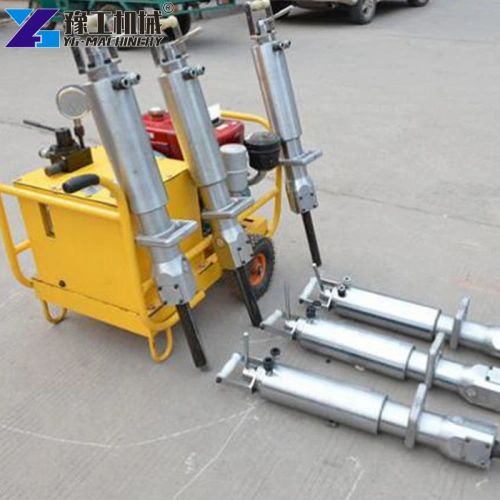
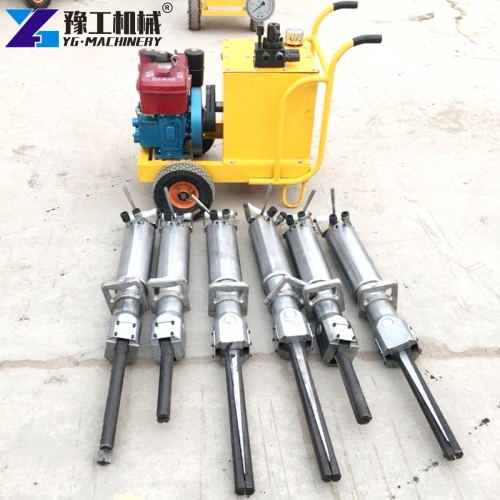
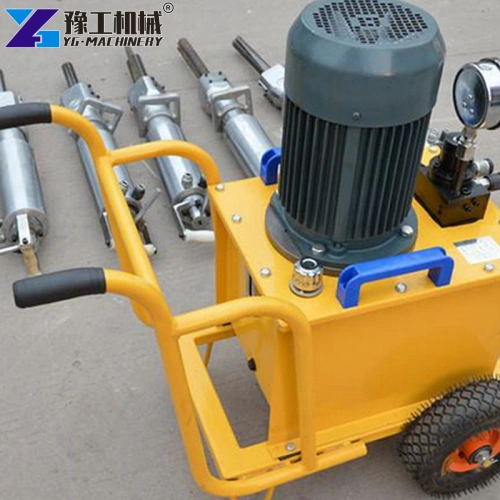
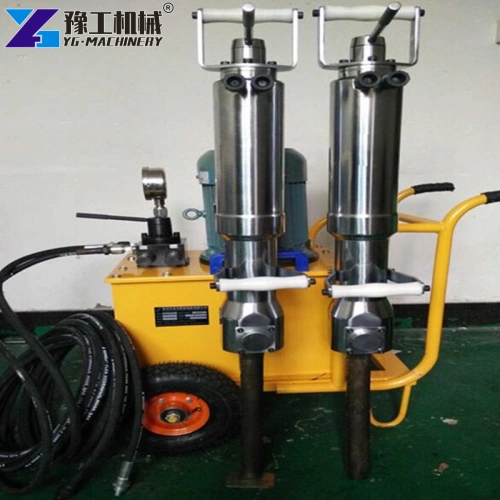
After reviewing the information, we recommended an 800T hydraulic stone splitter with an electric hydraulic pump station.
The system included:
- Hydraulic power unit
- Splitting cylinders
- High-pressure hydraulic hoses
- Control valve system
Because the quarry planned to expand later, we also designed the system so one pump station could support several splitter heads in the future. That reduced future investment.
Installation Was Easier Than the Customer Expected
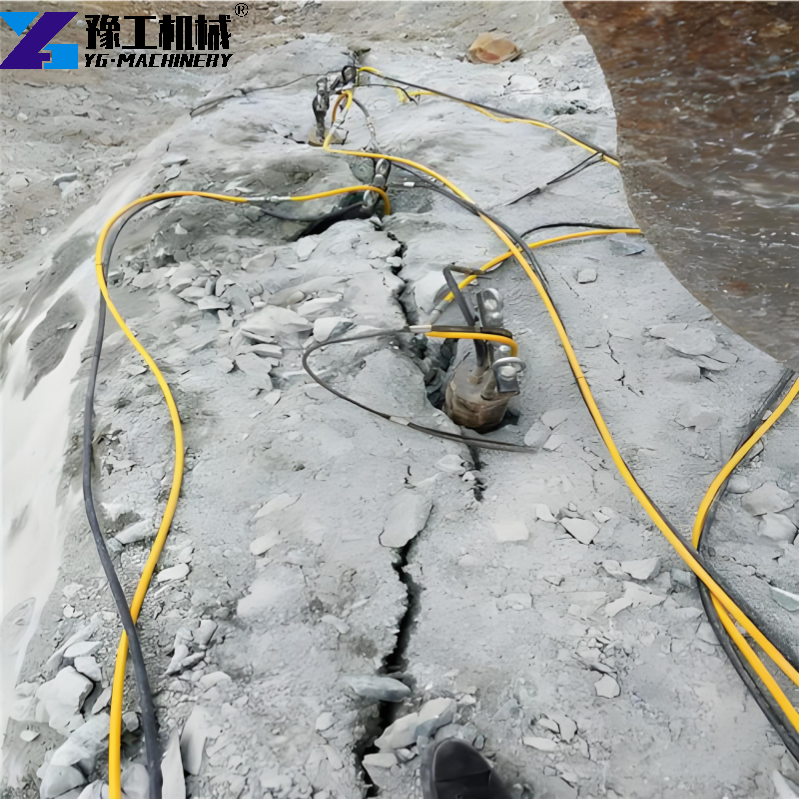
The equipment arrived in Arizona about five weeks after production. Our engineers provided installation videos and remote guidance. The operators quickly learned the process.
First, they drilled holes according to the recommended diameter. Next, they inserted the splitter wedge. Finally, they started the hydraulic pump.
The pressure pushed the wedge outward until the granite separated naturally from inside the rock.
No explosion.
No flying rocks.
No heavy vibration.
Project Results After Six Months
Six months later, David shared production records.
Compared with their previous working method:
- Rock splitting efficiency increased by approximately 42%
- Labor requirements dropped by 25%
- Fuel consumption decreased because blasting equipment was no longer needed
- Stone block recovery improved by nearly 18%
The biggest surprise was not speed. It was consistency. The quarry could now produce blocks with fewer unexpected cracks, making them easier to sell.
David told us,
“Now our production schedule feels predictable. That’s something we never had before.”
Predictability matters. Especially when every truck has a delivery date.
Industry Tip:
Stable production is often more valuable than peak production.
Where Hydraulic Rock Splitter Machines Create Value
A rock splitter machine is no longer limited to quarry operations. Today, contractors use hydraulic splitting technology in many industries.
Granite and Marble Quarrying
Large natural stone blocks require controlled splitting.
A hydraulic solution reduces waste and protects valuable materials.
Concrete Demolition
Many city projects prohibit blasting.
A hydraulic stone splitter for sale offers a quieter solution for:
- Bridge foundations
- Concrete walls
- Building basements
- Reinforced concrete structures
Mining and Rock Excavation
Mining companies use hydraulic splitters for:
- Ore extraction
- Rock excavation
- Secondary rock breaking
- Underground mining
The equipment supports non-explosive rock breaking, making operations safer in restricted areas.
Tunnel Construction
Tunnel contractors often work close to existing infrastructure.
A hydraulic splitter creates controlled rock separation with minimal vibration.
This helps reduce environmental impact while improving worker safety.
Industry Tip:
Hydraulic splitting technology performs best where blasting is restricted or expensive.
Why Contractors Continue Choosing YG Machinery
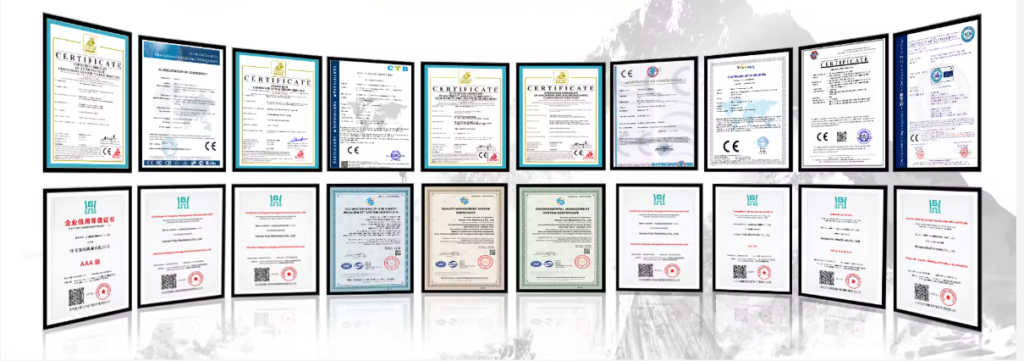
YG Machinery has supplied hydraulic splitting equipment to customers across the world, including the USA, Portugal, Peru, Chile, Brazil, Mexico, Turkey, South Africa, Kenya, and Saudi Arabia.
Our customers work in different industries.
Some produce granite.
Some remove reinforced concrete.
Others excavate tunnels or mine hard rock.
Although every project is different, our service process remains the same.
We provide:
- Equipment selection advice
- Hole size recommendations
- Custom hydraulic configurations
- Remote installation support
- Technical assistance after delivery
Buying a hydraulic rock splitter for sale should never end when the machine leaves the factory.
Real support starts after delivery.
Industry Tip:
A reliable supplier saves more money than the lowest quotation.
Start Your Next Project with YG Machinery
If you are searching for a hydraulic rock splitter for sale, choose equipment that matches your project instead of simply choosing the lowest price.
Whether your project involves granite quarrying, rock excavation, concrete demolition, underground construction, or other non-explosive rock breaking applications, YG Machinery can recommend the right solution.
Tell us about your rock type, drilling conditions, and production target.
We’ll help you choose a hydraulic splitting system that fits your project—and keeps it moving forward.