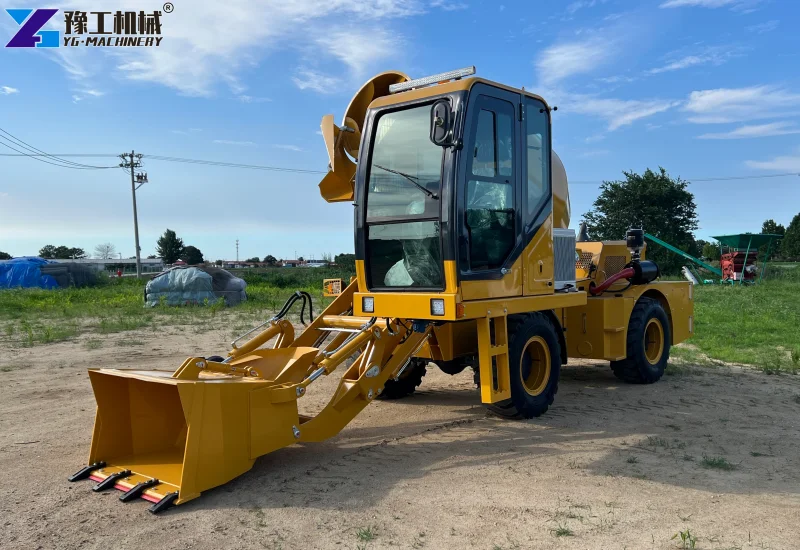
A mobile concrete mixer is a machine that can move to a construction site and produce fresh concrete directly where it is needed.
Unlike a fixed batching plant, it does not require a permanent installation area. It can follow the project from one location to another.
For road construction, housing projects, and remote infrastructure work, this type of equipment helps contractors make concrete faster and reduce transportation problems.
From my experience working with overseas buyers, many beginners think all concrete machines are similar. They are not. Different projects need different solutions.
How Does a Mobile Concrete Mixer Work?

The working process of a mobile concrete mixer is easier than many beginners expect.
First, the operator uses the bucket to load sand, stone, and other materials.
Then, cement and water are added into the mixing system.
The drum rotates and mixes all materials evenly.
Finally, the machine moves to the required position and pours the fresh concrete.
This process is called on-site concrete mixing.
Compared with traditional concrete supply methods, it reduces waiting time and gives contractors more control.
For example, a rural road project may be located 50 kilometers away from a concrete supplier. Waiting for delivery trucks can slow down the entire project.
A mobile mixer solves this problem by producing concrete directly at the job site.
Beginner tip: If your project location changes often, mobile equipment is usually a better choice than fixed equipment.
Where Is a Mobile Concrete Mixer Used?
Different industries have different working conditions. Understanding your application helps you avoid buying the wrong machine.
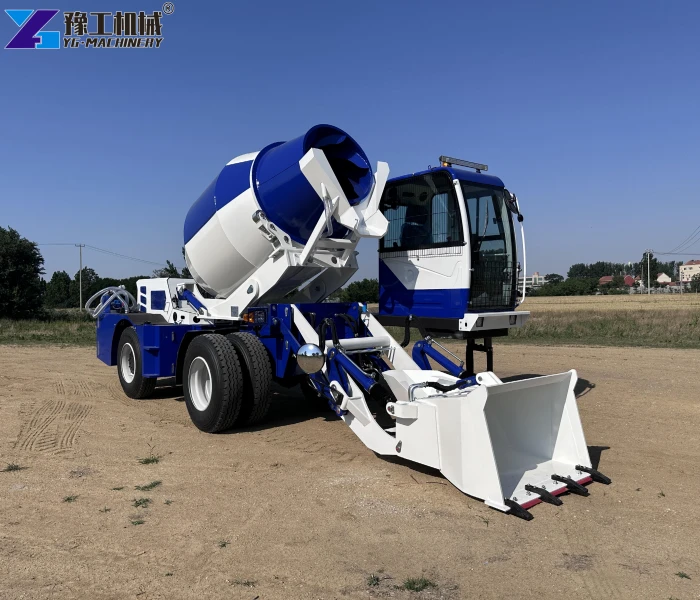
Why Do Rural Road Projects Need a Mobile Concrete Mixer?
Rural road construction often faces two problems:
Long distance.
Difficult transportation.
A mobile concrete mixer allows workers to produce concrete near the construction area.
It is commonly used for:
- Rural roads
- Small concrete pavements
- Road shoulders
- Village infrastructure projects
YG Machinery equipment uses a four-wheel drive system, which helps machines work on muddy roads and uneven terrain.
How Is a Mobile Concrete Mixer Used in Housing Construction?
Small housing projects often have limited space. Traditional concrete trucks need wider roads and better access conditions.
A mobile concrete mixer truck can enter smaller construction areas and produce concrete based on daily needs. This reduces material waste caused by delayed concrete delivery.
For small contractors, this flexibility is valuable.
Why Are Mobile Mixers Suitable for Remote Projects?
Mining areas, mountain construction sites, and rural projects are often far away from cities. Building a fixed batching plant is expensive and time-consuming.
A mobile machine can follow the project.
This is why many small overseas contractors choose a self-loading concrete mixer truck for flexible construction work.
Beginner tip: If your project is more than 30 km away from a concrete supplier, calculate transportation costs carefully.
What Should Beginners Check Before Buying a Self-Loading Concrete Mixer Truck?
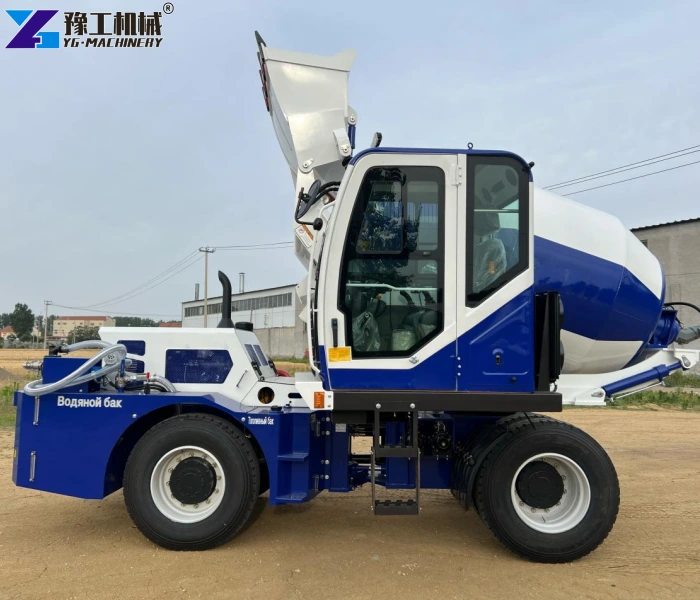
Many new buyers only focus on capacity.
For example:
“Is a 3.5m³ machine always better than a 2m³ machine?”
Not always. The correct choice depends on your project.
1. Check Your Daily Concrete Demand
Production capacity decides whether the machine fits your work.
YG Machinery provides different models:
- 1.8m³
- 2.6m³
- 3.5m³
- 4.0m³
The 3.5m³ model is suitable for many small and medium construction projects. It produces 3.5 cubic metres per batch. It can complete about 4–5 batches per hour. The theoretical production capacity reaches around 15.5m³/h. Actual output depends on material preparation, distance, and operator skills.
2. Check the Working Environment
The road condition affects equipment selection.
If your job site has:
- Mud roads
- Mountain roads
- Sand areas
- Uneven ground
You need stronger driving performance. YG Machinery mobile mixers use four-wheel drive and can climb slopes up to around 40 degrees. This improves stability in difficult areas.
3. Check Operation Simplicity
For small construction teams, easy operation is important.
Modern mobile mixers usually combine:
- Automatic loading
- Mixing
- Hydraulic control
- Concrete discharge
A trained operator can complete most daily tasks. YG Machinery models also focus on operator comfort with a practical cab design. Long working hours become easier.
Beginner Customer Case: How a Tanzanian Contractor Started Using a Mobile Concrete Mixer
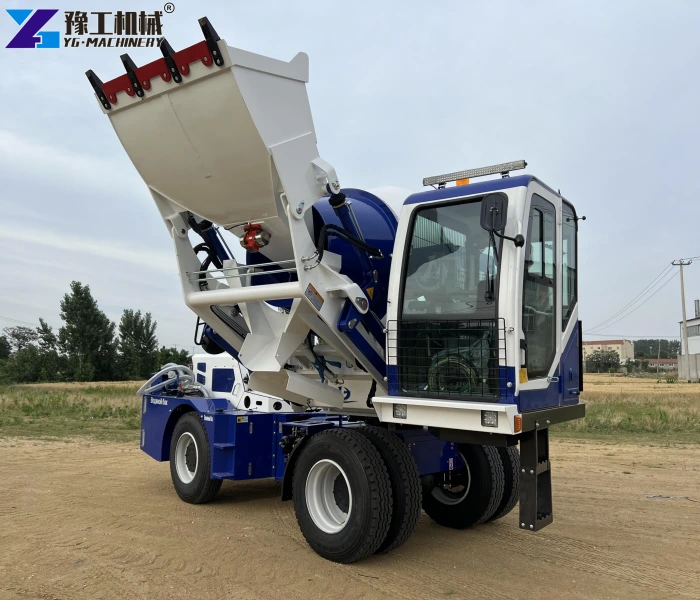
In 2025, a small road contractor from Tanzania, named Michael, looked for his first mobile concrete mixer. Before purchasing, his team depended on local concrete suppliers. The problem was common. The construction site was far from the city, and delivery trucks often arrived late.
Sometimes the team waited for hours. The project schedule suffered. At first, Michael worried that advanced equipment would be too expensive and difficult to operate. After communication, he selected a 3.5m³ self-loading model.
After delivery, his operator learned the basic operation quickly. The machine handled loading, mixing, and discharge on site. The project mainly focused on rural roads and small infrastructure work.
After using the machine, the team achieved several improvements:
- Less waiting time for concrete delivery
- Lower waste from unused concrete
- More flexible daily scheduling
- Ability to support multiple job locations
Michael later said the biggest advantage was not only speed. It was freedom. Before, they had to arrange concrete delivery before work. Now, they decide on concrete production based on the daily plan.
Final Thoughts: How to Choose the Right Mobile Concrete Mixer?
For beginners, buying a mobile concrete mixer is not only about choosing a machine.
It is about choosing a solution that fits your project.
Before purchasing, consider:
- Daily concrete demand
- Road conditions
- Machine capacity
- Engine options
- Maintenance requirements
YG Machinery provides different models for different applications:
- 1.8m³ mobile concrete mixer for small housing projects and limited spaces
- 2.6m³ mobile concrete mixer for medium construction work
- 3.5m³ mobile concrete mixer for roads, infrastructure, and general construction projects
- 4.0m³ mobile concrete mixer for larger projects with higher concrete demand
The right equipment is not always the largest one.
It is the machine that matches your construction plan, working environment, and long-term needs.